rice
Shell-shaped sushi (Hamaguri-zushi) for Girls' Festival
From the archives, originally posted March 2, 2007: I’ll be making these pretty egg-wrapped sushi again for hinamatsuri (Girl’s Festival) on Monday, March 3rd. The pale yellow and pink colors are like a harbinger of spring for me, besides being very girly. As delicate as they look, they are pretty easy to make. I have revised the recipe in minor ways. It’s a great way to use usuyaki tamago. Enjoy!
Tomorrow, March 3rd, is Momo no sekku or Peach Day in Japan. Peach blossoms usually start blooming around this time, signifying the coming of spring. It’s also the day for hina matsuri, the Doll Festival or Girls’ Festival. Households with daughters display hina ningyo-, traditional dolls that represent a princess’s wedding procession. This is because the ultimate happiness expected for a girl was for her to make a fruitful and comfortable marriage. Nowadays girls may be expected to do other things besides become happy wives, but on this day at least traditions still hold strong.
In Japan there is a long standing stereotype that girls and women like very sweet things, while manly men like less sweet and bitter things. So, for Hina Matsuri the guests are served sweet things like amazake (a very thick non-alcoholic hot drink made from the lees of sake, rather like eggnog in color and cloying sweetness), hishimochi (tri-colored mochi cake) and okoshi (colored sweetened puffed rice). Although there were three girls in our house, none of us liked amazake at all. However, my mother often made some kind of sushi for Hina Matsuri, which we really loved.
Here are two kinds of very pretty, girlie sushi in feminine pink, yellow and white with a touch of green. These colors fit the theme of Hina Matsuri perfectly: the traditional hishimochi is colored white, pink (or light red) and green.
The first is hamaguri-zushi or clam sushi, pictured here. It’s supposed to look like a clam, but to me it looks just as much like a little yellow flower. (Hamaguri are in season in March in Japan.) It can be filled with any kind of sushi rice, but here I have made a slightly pink-tinged sushi rice with lemony smoked salmon, mitsuba or flat-leaf parsley and white sesame seeds, wrapped in a usuyaki tamago or thin omelette. It’s related to chakin-zushi, where the omelette is wrapped in a bag shape and tied, but slightly less fiddly since all you have to do is fold it into quarters.
Besides making a very pretty spring party dish (for an appetizer maybe, or as part of a buffet), these work very well as bento items too since the sushi rice has good keeping qualities, and the omelette keeps the rice from drying out. Plus you can just grab them with your hands to eat.
The second sushi is smoked salmon temari zushi - the recipe is here. continue reading...
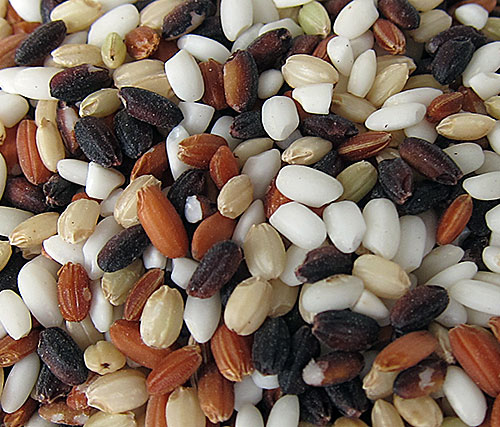
Zakkokumai: Rice with seeds and grains and bits
[Update:] There seems to be some confusion about how zakkokumai is cooked and looks like, so I’ve added some more photos and such.

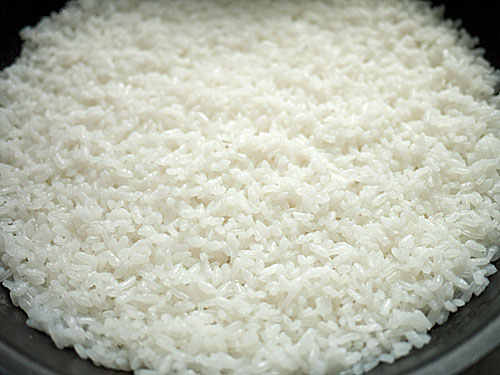
Rice is such an integral part of a Japanese meal, that the word for ‘meal’ (gohan, ご飯) also means rice. White rice is the norm, both for taste and for various cultural reasons. But as you probably know, white rice (hakumai, 白米) is rice that has been stripped of most of its nutrients, leaving just the starch.
Brown rice (genmai) is the obvious healthier alternative. But brown rice can take some time to cook, what with the soaking and so on that’s needed, and some people simply don’t like the taste or texture.
In recent years, something called zakkoku-mai (雑穀米)has become increasingly popular in Japan. Zakkoku just means “mixed grains”, and mai is rice. Another name for essentially the same thing is kokumotsu gohan (穀物ご飯). continue reading...
Brown rice and green tea porridge (genmai chagayu)
A traditional custom in Japan is to eat nanakusa gayu, or seven greens rice porridge, after the New Year’s feasting period, to rest the stomach and bring the body back into balance. At any time of the year, kayu or okayu are eaten when the body is weakened by sickness, fatigue or overeating.
Chagayu or tea rice porridge is a speciality of the ancient city of Nara and the surrounding area. (Nara was briefly the capital of Japan in the 7th century, and is one of the most historical cities in the country). Chagayu is usually made with white rice, but I used brown rice (genmai) instead, plus a small amount of firm green puy lentils from France. The lentils are not traditional, but I like the contrasting texture.
This has been my breakfast for about a week now. It’s not in the same category as eggs and bacon or a stack of pancakes, but I find my body needs something like this sometimes to bring it back into balance. It’s filling and warming, yet feels very cleansing to the body. A cup of this has less than 100 calories, and is high in fiber. continue reading...
Answering some rice cooker questions
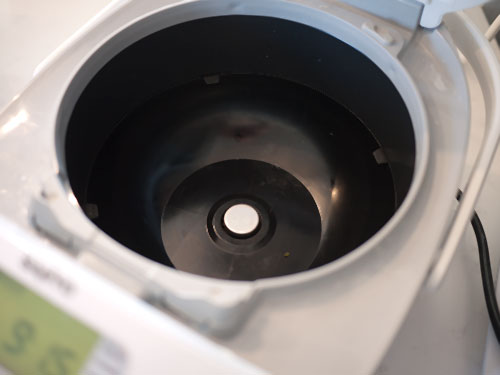
A few readers have emailed me recently about rice cookers by coincidence. So I thought I would put my answers here for everyone’s benefit. continue reading...
Japanese-style vegan mushroom rice: Kinoko no takikomi gohan revisited

The very first full recipe I posted on Just Hungry almost 4 years ago was Mushroom Rice (kinoko no takikomi gohan), and it still gets a lot of visits and comments, even though there’s no photo to whet the reader’s appetite or anything.
The original recipe called for traditional dashi stock made from bonito (fish) flakes, and suggested adding chicken and other things.
This version is a lot simpler to assemble and it’s all vegan, but it’s just as tasty. And it comes with a photo! (My early photos on the site are pretty awful. I like to think I’ve learned a little since then.) I am using this in an upcoming bento, but it’s good for regular dinner too, so it’s posted here. It’s actually the best when it’s freshly made - the aroma of the mushrooms fills the kitchen, quite irresistible if you love mushrooms as I do. It is a very autumn (fall) kind of dish.
I think that this dish reflects my changing tastes and eating habits too, not to mention how I approach writing for Just Hungry, too. 4 years ago, I wasn’t that worried about health issues or anything of that nature in regards to food. Now, I am rather proud that I have a tasty dish that is sugar-free, gluten-free (if you use a gluten-free soy sauce), and vegan! I feel a bit trendy. continue reading...
Botamochi for spring, Ohagi for fall: Sweet Japanese rice and bean cakes
The seven days centered around the bi-annual days of the vernal equinox is a Buddhist festival period known as higan (or o-higan for the honorific term) in Japan. The fall (autumn) higan is aki no higan, and the spring higan is haru no higan. Since the day of the spring equinox is March 21, we’re about to enter the haru no ohigan period.
During haru no higan, a sweet confection called botamochi is eaten. The mochi part means sticky, pounded rice, and the bota part comes from botan, or the tree peony. Botamochi is supposed to ressemble a tree peony flower.
During the autumn equinox (aki no higan or simply (o)higan)) period, a very similar confection called ohagi is eaten. This is supposed to look like a hagi or bush clover flower (Latin: Lespedeza thunbergii). Botamochi and o-hagi look the same to me, even though a hagi flower looks nothing like a tree peony flower, but the good old ancestors were probably a lot more imaginative than I am.
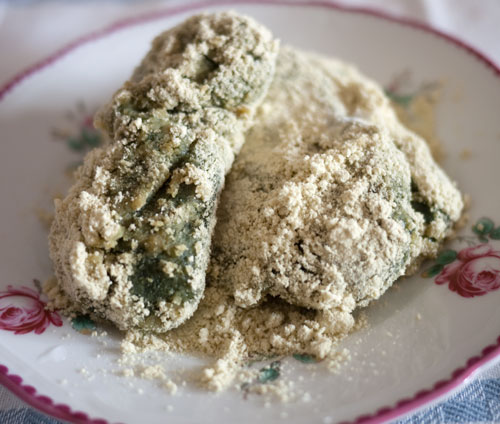
Botamochi and o-hagi are made of sticky rice and sweet tsubuan, ‘chunky-style’ sweet azuki bean paste. They are a bit fiddly to make but not difficult, especially if you use one of my favorite cooking helpers, plastic cling film. Since these are best eaten freshly made, it’s well worth the effort to make them at home if you like bean-based Japanese sweets. You can adjust the amount of sugar in the tsubuan to your taste. Here I have made three variations: coated with black sesame seeds; coated with kinako (toasted soy bean powder); and the most traditional form with the rice cake wrapped in a layer of the tsubuan. continue reading...
Smoked salmon temari zushi: Ball-shaped sushi
Following up on the previous recipe for shell shaped sushi, here is another kind of sushi that’s great for parties. Temari are small cloth balls made from leftover scraps of kimono fabric, and temari zushi are meant to look like these colorful toys.
You can make temari zushi with any number of things, such as thinly sliced sashimi grade fish, boiled and butterflied shrimp, thinly sliced and cooked or uncooked vegetables, and even thin slices of cheese. You will likely never see temari zushi at a sushi restaurant - this is homey home-style sushi.
For these, I’ve used thinly cut slices of pale pink smoked salmon, with tiny amount of cream cheese inside, rather in the same vein as a New York Roll - quite non-traditional but it’s a great combination. The key is to make the temari zushi on the small side since they are quite rich. continue reading...
Japanese Dry Curry
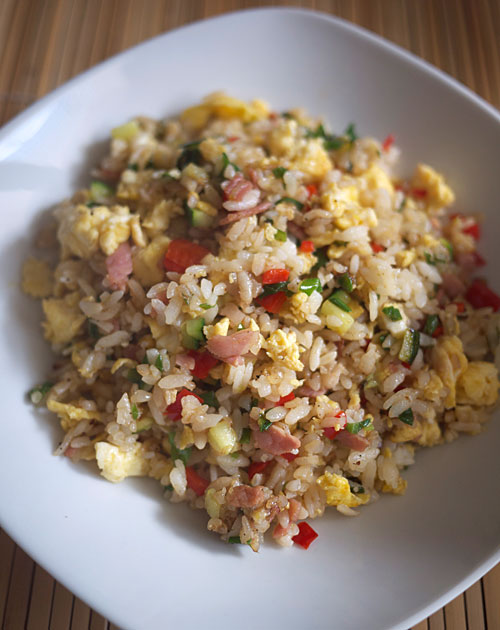
While the standard curry dish in Japan is a kind of curry stew served on plain rice, dry curry, which is a sort of fried rice with curry flavor, is almost as popular. And unlike the stew-type of Curry Rice it’s very fast and easy to put together.
What makes it Japanese really is the use of japonica (medium-grain) rice. Dry curry made with Japanese rice makes a great obento lunch, tasty at room temperature or warmed up in the microwave. The stick-together moist quality of the rice keeps it edible where a dryer stay-apart rice like basmati might taste too dry. Dry curry also has the mixture of sweet and savory, which appears quite a lot in Japanese food, especially the kind that comes from the Kanto (Tokyo-area) region where my family is from. continue reading...
Japanese beef curry (Curry Rice)
Japanese curry belongs to the group of typically Japanese foods that have origins in European cuisine, called yohshoku. Curry is tremendously popular in Japan - it's on the menu at just about every 'family' restaurant and department store restaurants, and there are curry-only restaurants as well as ones that specialize in high class yohshoku in general.
Japanese curry, called curry rice (or kareh raisu) since it's always served with rice, is not much like the curries from India, Thai or other places with better known curries around the world. The best way to describe it is probably to say it's like a English style stew with curry. (It's not at all like the curries you get in modern Britain, which are firmly in the Indian or Pakistani curry families.)
If you've ever been to a Japanese grocery store, you've probably seen the blocks or bags of curry base taking up an inordinate amount of shelf space. Competition amongst curry base makers in Japan is fierce. The bases are pretty convenient to use, but these days I use them less and less, since I discovered that making curry properly from scratch is not that much more effort than making curry with a readymade curry base. Commercial curry bases contain things like sugar or corn syrup as ingredients, plus some of them use mystery fats (always check the ingredient lists). I add sweetness just via the vegetables, especially a huge mound of slowly sautéed onions.
Either way, to get the most flavorful curry takes a long time. This is definitely a slow-cook meal.
This recipe for beef curry can be adapted to other kinds of meat, or to vegetarian options too. I've included instructions for using a store bought curry base as well as making your own curry roux base. continue reading...