feature
Monday photos: New York cravings

When in New York... continue reading...
Setsubun and beans article in the Japan Times and food superstitions

This month’s Japan Times article is about the traditions and superstitions surrounding Setsubun, which is coming up on February 3rd. continue reading...
Monday photos: This little pig is not a guinea pig

Why do we have a problem with eating things with faces? continue reading...
A super-efficient Japanese kitchen
A video showing one Japanese mom’s tiny yet super-efficient kitchen. continue reading...
What's in your kitchen? What is your kitchen?

How would you describe your kitchen, and what’s stocked there? continue reading...
Totally off topic: About your small business site or blog, and getting it noticed - what not to do
This has nothing at all to do with Japan, or food, or anything else that I normally write about here. But I am putting it on this site in the off chance that it will be read by regular folk. That is, people who just happened to land here, looking for a recipe perhaps. It’s not for web designers or developers or people who built stuff for the web. And it’s certainly not for so-called “SEO experts”.
But I just couldn’t take it anymore. continue reading...
Monday photos: Winter in Provence
Some weeks to go until spring, but in the meantime the scenery is beautiful. continue reading...
Basics: Japanese soy sauce - all you need to know (and then some)

An exhaustive look at Japanese soy sauce. continue reading...
Monday photos: Santa

My stepfather: accountant by day, Santa by nights and weekends. continue reading...
Sweet potatoes (satsumaimo) in the Japan Times, plus an update

This month’s Japan Times article is about sweet potatoes*, which are called satsumaimo in Japanese. continue reading...
Accidental butter

From the age of 3 on, or so my mother says, I would always hang around the kitchen asking questions, tilting conatainers to my level, getting underfoot and in everyone’s way. After about age 5, I was reluctantly given some small, low-risk things to do, like making panko from day-old bread, or filling the salt and pepper shakers. continue reading...
Monday photos: Coffee break in Japan

In Japan, coffee is just as ingrained in everyday life as tea. continue reading...
Monday photos: The iPhone 4S as a camera for food bloggers
For this week’s Monday Photos, I’d like to get just a bit technical and look at the suitability of the iPhone 4S as a serious camera for food bloggers. continue reading...
Monday photos: Sanma (pacific saury) is the quintessential fall fish

The favorite fish of the fall season in Japan. continue reading...
Monday photos: Miniature baba au rhum, Hotel Le Royal Lyon

A delicious, tiny morsel from a most elegant French hotel. continue reading...
A full review of Supermarket Woman by Juzo Itami

Looking in-depth at an old favorite. continue reading...
Monday photos: Yuzu miso container from Yaosan, Kyoto

A container that reveals what lies within. continue reading...
Monday photo: Sack of bread, Aix-en-Provence

A photo and a story, first in a series. continue reading...
The "Indo Karii" at Nakamuraya in Shinjuku, Tokyo plus the three degrees of curry hotness

Japanese curry hotness levels, and my favorite childhood curry. continue reading...
What's your national dish - or, is there any such thing?
Did you know that ramen is considered to be one of the two main National Dishes of Japan? continue reading...
Kyoto jo-gashi (wagashi) and iced matcha in the Japan Times
This month’s Japan Times article is about Kyoto sweets. continue reading...
Obsessively obsessing about my kitchen
The current object of my obsessions is this space. continue reading...
Setsuden article in The Japan Times, plus suzumi or 'keeping cool' the traditional way

This month in the Japan Times, I talk about setsuden (cutting down on electricity consumption) and suzumi (keeping cool). continue reading...
Japanese ingredients: Myoga or Myouga

About myouga, the shallot-shaped, gingery flower bud that’s a ubiquitous garnish on, or with, many Japanese summertime dishes. continue reading...
Clearing up the tea testing confusion (with updates)
This is a follow up to my previous post about above-safety limits levels of radioactive elements (namely, cesium) found on tea grown in Kanagawa prefecture. There seems to be some confusion over how tea is tested, due to some misleading news reports. (Note: I have updated this post several times to reflect new events.) continue reading...
Keeping Japan Going, Part 2: Konbini love, plus there are angels

I’ve talked about the awesomeness of konbini, or Japanese convenience stores, before. Actually, almost everyone who has been to Japan raves about the awesomeness of konbini. continue reading...
Radiation contamination found on tea grown in Kanagawa prefecture (Ashigara tea)
Regarding the radiation contamination detected on tea leaves grown in Kanagawa prefecture. continue reading...
Spring vegetables article in the Japan Times

A new article in the Japan Times about spring mountain vegetables, plus a bit more about vegetables. continue reading...
How one retailer is dealing with the vegetable crisis in eastern Japan

There is an ongoing crisis of confidence regarding the safety of vegetables from a farming area that mainly serves the Tokyo metropolitan area. I went to my favorite produce seller in Yokohama to see how they are dealing with it. continue reading...
Greetings from Japan

I’m writing to you from my mother’s home in Yokohama, Japan, where I’ve been since Tuesday. It was another lovely early spring day today. The weather was warm enough to go outside without a coat. Kids were playing outside all day, since schools don’t start until next week. Their shrill voices waft all the way up to my mom’s 8th floor apartment. Normally I’d be a bit annoyed, but not now. continue reading...
Japan Earthquake: How to help, personal update
Update, how to donate. continue reading...
Respecting traditions
Pondering a little about religious and cultural traditions, and food. continue reading...
A visit to Serious Eats HQ, New York

Yesterday, I had the opportunity of visiting the World Headquarters of Serious Eats in New York. What a great place it is. continue reading...
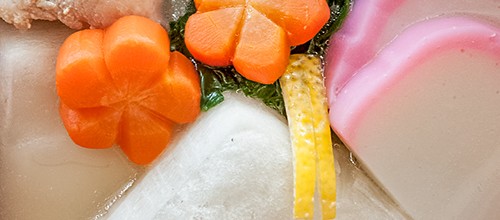
Everything in osechi ryouri (Japanese New Year's feast food) has a meaning. (And a confession..)

Take a look at some homemade osechi ryouri, or traditional New Year’s Day feast food. continue reading...
Happy New Year!

Happy New Year! 明けましておめでとうございます。 continue reading...
Taimeiken, Nihonbashi, Tokyo - home of Tampopo Omuraisu (rice omelette)

I finally made it to Taimeiken, an old time yoshoku restaurant in Nihonbashi, to indulge in the original Tampopo Omuraisu (rice omelette). Yes, that Tampopo. continue reading...
A visit to Obana, a traditional Edo-mae unagi-ya (old Tokyo style eel restaurant)

A little slice of old Tokyo in an out-of-the-way area of Tokyo, Obana is an unagi-ya (eel restaurant) that even someone who’s not an unagi fan can love. continue reading...
A visit to the Shin Yokohama Raumen (Ramen) Museum
A museum that pays homage to a single type of dish? Why not - this is Japan after all. continue reading...
Holy Matsutake!

It’s matsutake season! Let’s see just how much you pay for one of the most expensive foodstuffs on earth. continue reading...
What inspires you to cook?
What inspires you to cook? continue reading...
Japanese food and beverages for diabetics and low-carb eaters
Since I was diagnosed with pre-diabetes, I’ve been doing a lot of research into what is recommended for diabetics in Japan to eat. There are several issues to keep in mind when eating or making Japanese style dishes, so I thought I’d share these here. Whether you’re planning to travel to Japan or are just a fan of Japanese cooking and restaurants, I hope you’ll find this useful. continue reading...
Wacky diets everywhere
About some weird ‘diet’ pills labeled Japanese, even though they aren’t from Japan at all, plus some REAL Japanese diets that are popular now. continue reading...
プロフィールみたいなもの
(This is my Japanese About page. For the more complete English About page go here.)
初めまして。イトウマキコと申します。中年女です。日本生まれ、元帰国子女、アメリカ、イギリス、スイスを経て、現在は南フランスのプロバンス地方の片田舎とスイスに二股かけて住んでいます。海外生活が日本に住んでいた年数よりも長い、いわゆる変な日本人です。 continue reading...
Stuck in a French hospital

About how I ended up in a French hospital, and how it’s been. Some angst and pretty dodgy looking food pics follow. continue reading...
Radio Exercise (Radio Taiso) and the Japanese summer

Using a form of exercise that’s a Japanese cultural institution, to get my circulation going while I’m stuck in a French hospital. continue reading...
The Panasonic Lumix GF-1, and pondering the photography needs of a food blogger

(Hi everyone. As Guruman posted, I was hospitalized for emergency surgery 2 weeks ago, and I’m still in hospital unfortunately. So there won’t be any new recipes from me for the time being. However, I still have lots of topics from my Japan trip to talk about. Here’s an article I was working on before I had to go to the doctor, and I was able to finish it up today finally. I’ll try to be back to full throttle real soon!)
Back in March, I got a new camera in Tokyo; the Panasonic Lumix DMC-GF1. I think this one just might be the ideal camera for many food bloggers who are looking to upgrade their point-and-shoots, or for a lighter alternative to a DSLR. Here’s a review of the micro four-thirds format itself and this camera in particular. It’s not a very technical review - there are plenty of those online elsewhere. Instead it’s focused on the photography needs of a typical food blogger. continue reading...
French natto!

As I slowly settle in to my new life here in France, I’m finding out about quite a lot of interesting local suppliers of the things that I want to eat, wear, sit on, or otherwise use. But I never thought that I’d find this: French natto, as in natto made right here in my region of France! continue reading...
The start of my new adventures...in Provence, France

In February 2009, I left the house I’d been living in off and on for years, and embarked on a quest for a new place to live. Last week the quest finally ended, and we’re now settling into a new house, which is actually a pretty old house, a new country and a new area for us - Provence, France. continue reading...
Grumpy Monday: I just don't get macarons
Is there any there there? continue reading...
Postcards from Kyoto - Surfaces, Keibunsha and conclusion
The final post in my Postcards from Kyoto series, with some reflections on what Kyoto stands for, plus more shopping and food. continue reading...
Looking at tofu

(Periodically I like to dust off an article from the vast Just Hungry archives, give it a little facelift, and present it on the front page again. I wrote this guide to tofu back in September 2008. I think it will answer most, if not all, your questions about Japanese-style tofu and related products. Enjoy!
There are several tofu recipes both here in Just Hungry as well as on Just Bento, and I’ve even shown you how to make your own tofu from scratch. However, up until now I have never really tried to explain the differences between types of tofu, when to use them and how to store them. Well now is the time to fix that. continue reading...
Postcards from Kyoto - Misuyabari and Hakotou, for lovers of sewing and handcrafts

This edition of the Postcards from Kyoto has no food in it…but if you’re a fan of handcrafts and sewing and the like, read on… continue reading...
Postcards from Kyoto - Nishiki Market, Masugata Arcade and the traditional sho-tengai
This is the third in my Postcards from Kyoto series.
The traditional center of life in a Japanese town is the sho-tengai (商店街), a street or collection of streets where all the local shops congregate. Often it is wholly or partially covered and made into a indoor shopping mall or arcade.
The most famous sho-tengai in Kyoto, and arguably in Japan, is Nishiki Ichiba (or Nishiki Shijo - the word for market, 市場, can be read either way) or Nishiki Market (錦市場), which proudly calls itself Kyoto’s Kitchen. Although it’s called a market, it is a sho-tengai really rather than a market in the European sense; it’s a narrow, covered street lined with small stores.
Sakura, Sakura: My ohanami (cherry blossom viewing) at Sankei-en, Yokohama
I will get back to my Kyoto Postcards, but I wanted to talk a little about cherry blossoms first, before April ends.
I have written about the ohanami, or cherry blossom viewing, culture in Japan previously. As I wrote back then, one of the things I miss about not living in Japan is the cherry blossoms in the spring. For this trip back home, I wanted to be sure not to miss the cherry blossoms. continue reading...
Postcards from Kyoto - Tofu from bean to plate: Kamo Tofu Kinki and Sosoan Restaurant

When you go to Kyoto, you must have at least one tofu meal. It’s just the way it is. Fresh tofu in Japan is far better than it is anywhere else, and the tofu in Kyoto is generally held to be the best in the country. This is generally attributed to the skill, refined court and/or temple-influenced culture and the quality of the local water. Whatever the reason, to most Japanese people Kyoto means tofu, and vice versa. A visit to a fine Kyoto tofu restaurant is very likely to convert even the most die-hard carnivore into a tofu fan.
During my week in Kyoto, I was able to pursue one family business’s vision of what tofu should be from beginning to end. Kamo Tofu Kinki, a company that’s been in business since 1834, makes tofu and related products in two tiny workshops located in the Gion Kiya-cho area of Kyoto. Later on, I visited Sosoan, the tofu restaurant owned and operated by Kinki for a multi-course tofu feast. continue reading...
Postcards from Kyoto - Sweet destinations: Kagizen Yoshifusa and Inoda Coffee
Kyoto, the former imperial capital, is the top tourist destination in Japan for many good reasons. A lot has been written about this city already, and it’s impossible to describe in a few sentences - so I’m not going to try to. Instead, I’ll share some of my favorite destinations in a series of pictures and short descriptions — as postcards if you will. Here’s my first postcard from Kyoto.
Kyoto is a city that hits the sweet spot for me in more ways than one. It is dripping with history, has fantastic shops, great art and craft galleries, and so many places to have a wonderful meal. It also has a lot of literal sweet spots. Perhaps because of its history as the seat of the imperial court, where ladies influenced much of the culture, there are many amami dokoro, or places to enjoy a bite of something sweet, both traditional and modern. continue reading...
A visit to the Studio Ghibli Museum in Mitaka, Tokyo
Back in early February, my sister Mayumi and I went to the Studio Ghibli Museum in Mitaka, a suburb of Tokyo. Here’s a brief report, with practical details as to how to get there and so on. I know that many Just Hungry readers are Ghibli fans, so I hope you find it useful. continue reading...
A tour through a fabulous Japanese department store food hall - Yokohama Takashimaya

One must-do in Japan for anyone interested even remotely interested in food is a visit to a depachika(see footnotes), or department store basement food hall. One of the more impressive food halls that I have seen is in the Yokohama branch of the Takashimaya department store. I recently had a chance to tour of the Yokohama Takashimaya food halls.
Warning: Lots of mouth-watering pictures to follow! continue reading...
Cool stuff from Japan: Beautiful traditional candies
Jewel-like candies are a long time tradition in Japan, and reflects the country’s love of small, beautiful and cute things. continue reading...
Cool stuff from Japan: Plastic food models used for nutrition education

Those famous realistic plastic food models aren’t just used for restaurant displays in Japan. They are used for dietary and nutritional education in hospitals as well. continue reading...
Cool stuff from Japan: Mammoth Meat?! Snack
If there’s one thing I don’t like about Japan, it’s that everywhere you go, there are constant reminders to do this, don’t do this, go here, go there, and so on. When you’re going up or down an escalator, a high pitched polite (usually female) voice tells you to watch your step, hold your kid’s hand, stay within the lines, don’t put pointy things like umbrellas between the steps, and whatever you do, don’t get your long hair caught somewhere (!). On a bus, not only does that high-pitched female voice (probably not the same voice, but they sound alike) tell you what the next stop and the next next stop are, but the bus driver usually repeats that information right after it’s been announced. The female voice also tells you to not stand up until the bus comes to a full halt, don’t smoke at the bus stop, give up your seat to the elderly…blah, blah blah, every 3 minutes. And as for the trains… it’s enough to drive one batty. You just have to tune it out, if you can. I’m sort of trained to listen to and obey public transportation announcements (since they actually mean something in Switzerland) so I’m having a hard time.
Which somehow brings us to today’s Cool (or in this case, wacky) item: Mammoth meat snack!
Cool stuff from Japan: Soy milk that's an instant tofu 'kit'
During my stay in Japan, I thought I’d feature some cool stuff (or things that you all may find cool) that I’ve seen. Here is a bottle of soy milk or tounyuu (豆乳) that I got at a shop in the local Tokyuu line train station (or in other words, it’s not like a special brand or anything). continue reading...
Book review: The Mish-Mash Dictionary of Marmite
Long time readers of this blog may know that I have an obsessive interest in certain foods. Near the top of the list of these is Marmite, the viscous, salty, dark brown yeast spread from Britain. Heck, I even have a category for it. Here’s my review of a fun book of Marmite facts. continue reading...
Another New York roundup: From Bagels to Madison Park
I still consider myself to be a New Yorker (technically I am) and go back there at least once or more a year. So I don’t write about my trips there all the time. This time I did have more than a few notable food encounters, so here is a not-so-short roundup. continue reading...
Menu For Hope VI: Just Hungry Offers a Taste of Japan Plus
Once again, Just Hungry is proud to offer a great raffle item for the annual Menu For Hope fund raising event, which will benefit the United Nations World Food Programme.
This year it’s personal: A hand-selected (by me, of course) box of Japanese goodies directly from Japan, plus…a signed copy of my upcoming book! continue reading...
Fugu (puffer fish): Would you or wouldn't you?

(Note: Your responses to the question posed below may be translated for a Japanese blog! Read on…)
Even though I’m Japanese, I do think that we eat an awful lot of food that could be considered to be odd. One of them is the infamous fugu, or puffer fish. Fugu’s main claim to fame, besides its extraordinary appearance (it puffs itself up to make itself look a lot bigger to predators), is that its skin and organs are highly poisonous. Nevertheless, it’s considered to be a great delicacy in Japan. It’s now fugu season in fact, so many people are tucking in to fugu sashi (fugu sashimi), fugu nabe (fugu hotpot), and so on. continue reading...
Miso Basics: A Japanese miso primer, looking at different types of miso

[From the archives. This miso primer was published here last September (2008). I’ve added some notes about miso-based blends, especially sumiso or miso with vinegar.]
This is a post that has been a long time coming. I kept on holding it off until I had a good variety of miso on hand to show photos of. I can’t say I have a comprehensive selection to show you, but I hope you will find this article useful anyway.
Miso (味噌、みそ), as you probably know already, is a naturally fermented paste made by combining cooked soy beans, salt, and often some other ingredient such as white or brown rice, barley, and so on. The texture can range from smooth to chunky, and the color from a light yellow-brown to reddish brown to dark chocolate brown, and the flavor ranges from mildly salty and sweet to strong and very salty. It is packed with umami and protein, not to mention all sorts of nutrients.
Miso-like fermented bean products and pastes exist all over Asia, but here I will mainly limit myself to the most commonly used Japanese misos. continue reading...
Julie and Julia: An overly long and very late review

Last night I finally got to see Julie and Julia. Here is my very long and otaku-ish take on it. continue reading...
Book review and giveaway: Izakaya, the Japanese Pub Cookbook
When a Japanese person dreams of quitting his or her rat-race job and opening a restaurant, the type of restaurant they usually envision is either a kissaten or kafe (a café-restaurant) or an izakaya. An Izakaya (居酒屋)is a small traditional pub that serves food, rather like a Spanish tapas bar. Many are quite tiny, with just the counter and maybe a few tables. The best ones are run with a lot of passion and love, and have fiercely loyal customers.
Izakaya, the Japanese Pub Cookbook conveys the atmosphere and love of food and good sake that are hallmarks of good izakaya perfectly. Written by Mark Robinson, an Australian journalist who fell in love with izakaya establishments in Tokyo, with gorgeous photography in both color and black and white by Masashi Kuma, it is part cookbook and part ode to the cult of the izakaya. You don’t just get recipes here, even though it’s called a cookbook. There are profiles of izakaya masters, useful advice on izakaya etiquette, notes on sake types, anecdotes and a lot more. I think it can reside as happily on a bedside table as in the kitchen - a quality I look for when I buy cookbooks. continue reading...
Real beef
Some real meat this time. continue reading...
Poverty, rice, and Air Yakiniku
A bit about Air Yakiniku, an odd slice of Japan. continue reading...
The sweet, cultured taste of Calpis

As your sometime guide to Japanese culinary culture, I would be remiss if I let another summer pass by without talking about Calpis.
Calpis is a sweetened fermented milk beverage. The label says:
“CALPIS” is a cultured milk drink, a refreshing gift from nature.
People tend to either love or hate Calpis. continue reading...
Traditional Japanese strategies for combatting natsubate, or the dog days of summer

A cat of our acquaintance’s natsubate strategy: All-day naps in the shade.
August is particularly bad in the Tokyo area where I’m from, as it is in most parts of Japan except for the northern parts of Hokkaido. It gets really hot, and the high humidity makes everything and everyone moist, sticky and generally nasty. There’s a bit of relief in the form of a brief evening thunderstorm (夕立 ゆうだち yuudachi) most days, but the respite is temporary. Getting a decent night’s sleep without air conditioning is pretty much impossible.
The term to describe the stage of lethargy and fatigue brought on by this hot, humid weather is 夏バテ (なつばて natsubabe; literally ‘summer fatigue’). Japanese people have devised various ways of combatting it. Some are food related, and some aren’t, but here are some of my favorites. continue reading...
Postcards from Southwestern France: Gazpacho or cold soup, Cassoulet, Albi, Moissac, Conques
We left Provence this week for a little trip to the Midi-Pyrénées in the southwestern part of France. We’ve been trying to save money by cooking at home most of the time since we started our nomadic existence in France (see previously; not that that’s much of a hardship, since the produce and other foodstuffs in Provence are spectacular). But this week we’ve been staying in an apartment in a 17th century townhouse right around the corner from the Toulouse-Lautrec Museum in the heart of Albi, the capital of the Tarn Department. Since there are tons of great little restaurants here, we’ve been indulging ourselves a bit. continue reading...
Borough Market, London: A Very Literary Food Paradise
When I found out that I’d be in London this week for a couple of days, my thoughts immediately turned to what food-related things I could fit into my schedule. Tea and scones, check. Curry, check. A visit to Japan Centre, check. But at the top of my list was a proper roam around Borough Market.
Long time readers of Just Hungry may know that I absolutely love markets, and go to them whenever and wherever I can. One big reason I’ve decided to move to the south of France is because of the wonderful markets here. So, how does London’s oldest market compare to some of my favorites? While Borough Market is not the biggest market, nor does it have the widest selection, or even the best selection, of foodstuffs, it’s a very special place. In my opinion, it’s simply the most intellectually pleasing market there is. continue reading...
Book review: The Enlightened Kitchen, shōjin ryōri (shoujin ryouri) for the home

A review of The Enlightened Kitchen: Fresh Vegetable Dishes from the Temples of Japan by Mari Fujii, a beautifully presented, easy introduction to the world of shojin ryori (or shoujin ryouri 精進料理), the highly refined vegan cuisine developed by Buddhist monks in Japan. One copy of this great book is up for grabs! continue reading...
Japanese food shopping in Lyon, plus different Asian stores as sources for Japanese food

This is a continuation of my series on Japanese food shopping, and frugal eating, in Europe. Previously I visited Paris and Düsseldorf’s Japantown.
Lyon, the third largest city in France and arguably the second most important one after Paris, does not have a large Japanese expat or immigrant population. However, there are some Japanese corporations that have factories or offices in the area, not to mention a large university population. So in terms of the availability of Japanese groceries in France, it ranks second to Paris, although it trails behind by a large margin.
It also gives me a chance to talk a bit about where exactly you can find Japanese ingredients, regardless of the town you’re in. continue reading...
A Frugal Eats blitz through Düsseldorf's Japantown

I’ve long been intrigued by the famed Japantown or Japan Quarter area of Düsseldorf, Germany, but haven’t had a chance to go there. It’s about a 5 hour drive from Zürich, and there was no work-related excuse to go there - until last week that is. So, following up on my mostly Japanese frugal eats blitz through Paris, here is my 2-day all-Japanese blitz through Düsseldorf. continue reading...
Workshop Issé: Purveyor of the finest Japanese food and sake in the heart of Paris

From the outside, Workshop Issé looks like just another unassuming little Japanese grocery and gift store. There are quite a few stores of this nature scattered about Europe these days. But inside this little boutique in the heart of the Japanese quarter in Paris, you can experience something quite special: A crash course on top quality artisanal Japanese food and drink. continue reading...
A Frugal Eats (mostly Japanese) blitz through Paris

Pursuing cheap Japanese (and other) eats in Paris. continue reading...
Savings Techniques for Women Who Can't Save

This article about my favorite Japanese personal finance book is part of Frugal Food Month. While it’s not directly about food, I hope it’s of interest to Just Hungry readers anyway! continue reading...
The Kakeibo and Japanese household budgeting tools

A few kakeibos, and Japanese womens’ magazines with budgeting-oriented articles. Look for these words: 家計 (household finances), 貯める (save money), 家計簿 (household finance ledger).
To kick off Frugal Food month, here is an article from the archives about Japanese household budgeting tools, which was supposed to be the start of a series - but then All Hell Broke Loose around Chez Maki, and the series sort of got forgotten. Well, the series will be revived this month, so in case you missed this one, here it is!
(Original intro: So why is there a money management article on a food site? Well, I think that the subject of our money is on a lot of people’s minds these days, and food spending is a major part of that. An it’s about Japan, and I know a lot of you read this site because it brings you bits of interest about my homeland. So, I hope you’ll enjoy this little derail.)
Many people worldwide are concerned these days about the economy. While it’s difficult for us as individuals to influence factors like what our financial institutions do, we can control where our money goes. While this topic is not directly about food, I thought it might be interesting to see how Japanese people handle household budgeting.
Why look at what Japanese people do? For one thing, Japan went through a severe economic correction (aka the “bubble economy”) in the late ’80s, largely in part due to overvalued real estate and resulting defaults on loans, which lasted well into the ’90s and even fundamentally changed the way Japanese society works. While the current Japanese stock market, yen, and banks are on a wild and bumpy ride just like the rest of the world, individuals (except for those who invested in stocks, currencies and such) on a whole seem to be a tiny bit less worried than people in North America or Europe. This may be because saving rates in Japan are amongst the highest in the developed world, estimated to be around 25% of income (though that has fallen from previous savings rates of 30 to 35%; in contrast, the saving rates in the U.S. average around negative 0.5%), or simply because household budgeting skills have been talked about for quite a long time. continue reading...
Kitchens out of the past

House-hunting, and encountering old, vintage kitchens. Fun! continue reading...
Japan: A Survival Guide For Vegans
At the moment I’m sitting in a cottage in France (recovering from a cold, but that’s another story), a land notorious for not being so vegan friendly except in the larger cities. The native cuisine is generally not vegan - even vegetable dishes often use things like dairy products or animal fats or stock in the cooking process, which can make things difficult. But if you are a vegan you probably know about this, and come prepared accordingly. (I think it’s a lot easier for lacto-ovo vegetarians in France; you could live on the delicious bread and cheese.)
If you are going to Japan, you might think that being vegan would be a lot easier. Japanese cuisine has a reputation for using lots of vegetables, seaweed and other vegan-friendly products. There is even a particular kind of cuisine in Japan called sho-jin ryouri (精進料理), a mostly vegan temple cuisine, with a long and highly regarded tradition.
But as a reader who emailed me recently found out, being a vegan in Japan is just as hard as it is in Europe. continue reading...
Kouya Dofu or Kohya Dofu, Freeze Dried Tofu

I’ve talked a little about kohya dofu or kouya dofu (高野豆腐)in the past, but I thought I’d describe it in detail so that I can refer back to it when I use this very versatile Japanese pantry staple in recipes.
Kouya dofu is freeze dried tofu. It’s a long lasting pantry staple of most Japanese households. continue reading...
Left-handed eating taboos
(Photo by scriptingnews)
Now that I know for sure that President Obama is a lefty, I wonder which hand he uses for chopsticks. continue reading...
Your guide to better chopstick etiquette (mostly Japanese)

The other day I was having lunch at one of the Asian-fusion restaurants in Zürich with a (non-Asian) friend. At one point, he speared a piece of chicken with one chopstick, brought it to his mouth and pried it off with his teeth. I must have a strange expression on my face, because he looked at me and asked me what was wrong.
Of course he did not know that in Japan, what he just did would be considered to be terribly rude, in the same way that someone who didn’t grow up in Europe might not know about not putting your elbows on the table. I explained this to him, and he sort of snorted and said “well why don’t you write a guide to chopstick manners on your site then!”
So, here it is: A guide to chopstick etiquette, Japanese style. continue reading...
MasterChef 2009, the best and worst of food TV in 2008, and upcoming

My favorite food TV show MasterChef is back for another round of competitive cooking fun! The hosts are John Torode and Gregg Wallace again, or Pasty and Toad as they are affectionately (or not) known in MasterChef fan circles. (I can’t remember who is Pasty and who is Toad though.) See my thoughts on the 2008 MasterChef finals and you’ll see why I love this show. I hope that 2009 will reveal equally exciting talents. continue reading...
Looking Forward to 2009 with a Wish List Notebook
A bit of a look back at 2008, plus making a Wish List for 2009 and beyond. continue reading...
Oahu, Hawai'i Part 2, Waikiki, Farmers' Market and Beyond
This was the vision I had of a hotel in Hawai’i! continue reading...
OMG, Turducken
From the archives. I did this 3 years ago, and will likely never do it again. This is offered as a cautionary tale should you be contemplating creating a Turducken for your Thanksgiving or other holiday feast. Originally published on December 28, 2005, and edited slightly.
I am not sure what came over us. We were planning a quiet, simple Christmas dinner - maybe roast a goose, or a nice chicken or two, or something. But then someone blurted out the infamous words.
"Hey, why don't we try a Turducken?"
In case you are not familiar with turducken, it is basically a Tur(key) stuffed with a duck(en) stuffed with a (chick)en. It supposedly originated in Louisiana, and has been popularized by famed New Orleans chef Paul Prudhomme. continue reading...
Oahu, Hawai'i Part 1, North Shore: Kahuku Shrimp and Shave Ice

The joys of shrimp and shave ice on the North Shore of Oahu. continue reading...
100 Japanese foods to try
Ever since I completed The Omnivore’s Hundred, I’ve been thinking about this: What 100 Japanese foods would I recommend people try at least once? I’ve been mulling over the list for days now, and I’m more or less satisfied with what I’ve come up with below.
I tried to keep away from foods that are only available in certain regions, or even certain restaurants or homes (e.g. my aunt’s homemade udon) and stuck to foods that are widely available in Japan. I’ve also tried to include foods from all categories and all price ranges, from wildly expensive matsutake mushrooms to el-cheapo snacks. I also did not limit the list to ‘genuine Japanese’ foods (純和風), but include Western-style yohshoku dishes and a sprinkling of chuuka (imported Chinese) foods that are so ingrained in Japanese food culture that most people barely think of them as Chinese any more. And of course, I have eaten all of the foods listed at least once - in most cases many, many times. I like them all!
The list is not numbered in order of preference. It’s just how I happened to list them.
[Update:]
I’ve now added descriptions and links to recipes if they are on the site, as well as the food names in Japanese - now with all 100 descriptions completed! I’ve made it so the descriptions are hidden initially, so you can have fun guessing what they are or trying to remember. Just click on the ? mark after each item! And I will keep adding descriptions gradually.
And no, nigiri-zushi and the most common types of sushi are not on the list, because I am assuming that if you are reading this, you’ve already had sushi. (Though… are you sure you’ve had great sushi at a top notch sushi-ya? See Judging a good sushi restaurant.)
I did not intention this to be a meme, but rather as a list of quintessentially Japanese foods that you might want to try. If you would like to post the list to your blog and play along though, please do so! Actually it would be even more fun if you make your own 10, 50, or whatever list of favorite foods if you dare. (It takes a whole lot more time and thought that you might think.) continue reading...
About Japanese ingredients and substitutions
[Updated to add Substitution section.]
I haven’t exactly counted it up, but of the thousands of comments left on Just Hungry, not to mention Just Bento, probably at least a quarter are questions about ingredients or ingredient substitutions. So I thought I might put down what my criteria are for what kind of ingredients I choose to feature in the recipes on either site, especially when it comes to Japanese recipes. [Update added on August 15th, 2008]: I’ve also added some suggested, and acceptable, substitutions. continue reading...
Full Japanese Breakfast, slightly scaled down
Recently, a reader asked in the comments about what I have for breakfast. It is definitely not as elaborate as this one.
The Supersizers Go ... Regency
The sixth and final episode of The Supersizers Go was dedicated to the Regency period, the time of Jane Austen and the lecherous, gluttonous, foppish, trend-setting Prince Regent, later George IV. Again, Giles and Sue play a well off middle-upper class couple of the day—he is a small landowner with an inheritance of around £50,000—but instead of being married as in other episodes they are brother and sister. This is so that they can portray the difficult state of an unmarried woman (Sue) with not much of her own income. The cold and sometimes horrified expressions on her would-be suitors’ faces reacting to her desperate advances seemed a bit too genuine. Here she is trying to hang onto a gentleman.
The Supersizers Go...Elizabethan
The erstwhile food time travellers went back to the earliest era covered in the Supersizers Go series, the Elizabethan period, which would be the equivalent of the Renaissance in the rest of Europe. It was a great time in British history, with adventurers exploring the world and bringing goods back from the New World, and the arts thriving, especially in the form of the Great Bard William Shakespeare.
It was also a quite exuberant and uninhibited society, one of the reasons why it’s one of my favorite periods in history. Here you see Sue Perkins contemplating Giles Coren’s massive codpiece with amusement.
Meiji Chelsea, the Japanese candy with the '70s vibe

Since watching the ’70s edition of The Supersizers last week, I’ve been on a bit of a nostalgia kick. I was lucky (or unlucky, depending on the perspective) enough to have spend my ’70s childhood in three countries due to my father’s job—England, the U.S. and Japan. I have fond memories of food, especially sweet snacks and candy, from all three places, my tastes have changed so much as and adult that I can’t stand many of them anymore. The one sweet from that era that I still love is Meiji Chelsea butterscotch candy. continue reading...
The Supersizers Go...to the 1970s, grooovy

Near the end of the fourth episode of The Supersizers Go in which the food time travellers go to the 1970s, Sue Perkins says that she saw the ’70s through the banisters of the staircase, as she and her siblings peered downstairs at the goings on of the adults. This was how I experienced a good chunk of the ’70s too. I used to peer through the treads of the very ’60s open wooden staircase in the house my parents rented in Wokingham, Berkshire, head upside down, spying on my parents and their guests when they entertained.
In any case, the ’70s episode was a lot more entertaining than I thought it would be, purely for the nostalgia value. I kept on squealing in recognition at many of the various foods trotted out. It did help that I actually spend a few years in the ’70s living in England with my family, since the Supersizers focused naturally on a very British version of that decade. continue reading...
The Supersizers Go...Victorian

The third episode of The Supersizers Go was not as interesting to me as the previous two, simply because I knew a lot about how the Victorians ate already. I didn’t realize how much I knew until I’d watched the episode, but it’s all come down to us via Charles Dickens, Elizabeth Gaskell and other period literature, not to mention Mrs. Beeton or even the American Fanny Farmer. Also, it doesn’t look like a whole lot changed between the Victorian era and the Edwardian period, which was covered in Edwardian Supersize Me. Still, those Victorians were sufficiently different from us in their eating habits to seem quite alien, but this was definitely the transitional period between the past and modern times. continue reading...
The Supersizers Go...Restoration: No water, lots of meat

I was not intending to do a recap of each episode of The Supersizers Go, but they are so interesting and just right up my alley. So, if you don’t have access to BBC 2, are here for the Japanese recipes, or both, please indulge me. I’ll try to be brief. continue reading...
After one month with a Wii Fit
I’ve had my Wii Fit now for almost a month (it was released in April here in Europe). I know it’s not directly related to food, but since a lot of people who visit Just Hungry are interested in fitness and weight loss, I thought I’d share my thoughts about it after using it for some time, especially since it just became available this week in the U.S. (Besides, way more people are likely to read it here than on my sporadically updated personal blog.)
Incidentally, I’ve written about the Wii as a fitness device previously on my personal blog, focusing on Wii Sports. In a nutshell I was not convinced that playing Wii Sports would do much to improve your fitness.
So, what about Wii Fit then? continue reading...
The Supersizers Go... on BBC Two: A fun look back at food in history
Giles, Sue and Allegra examine a week’s worth of rations during WWII.
Last year, a very interesting hour-long program(me) called Edwardian Supersize Me aired on BBC Four. Taking their cue from the hit documentary Supersize Me, Giles Coren, food critic for The Times, and writer/actress/comedienne Sue Perkins spent a week eating as the middle-class Edwardians did - meaning a lot. The pair are back, upgraded to BBC Two, in a new multipart series called The Supersizers Go…. The premise is the same as Edwardian Supersize Me - in each show Sue and Giles spend a week eating as people did in a certain historical era. The first episode aired last night, and the era was World War II. continue reading...
Different types of Japanese tsukemono pickles, and how some may not be worth the hassle to make yourself

Periodically, someone asks about Japanese pickles - those crunchy, salty, sweet-sour, even spicy bits of goodness that accompany a traditional meal, especially breakfast. There are a big variety of Japanese pickles, and sooner or later you might consider making them.
Some time ago I did a week-long series on making instant, or overnight pickles. These pickles can be made very quickly, usually with ingredients that are easy to get a hold of. If you want to try your hand at Japanese style pickles, I recommend starting there. There are also a couple of cookbooks in English dedicated to quick and easy pickles, both of which are quite good: Quick and Easy Tsukemono: Japanese Pickling Recipes by Ikuko Hisamatsu, and Easy Japanese Pickling in Five Minutes to One Day: 101 Full-Color Recipes for Authentic Tsukemono by Seiko Ogawa.
However, the type of pickles that you are likely to be served in a high class traditional inn in Japan, or even the type you can buy in vacuum sealed packs at a supermarket, are a bit more complicated to make, especially outside of Japan. Here are some examples. continue reading...
Of cherry blossoms, ohanami and Japanese culture
It may surprise you to read this, but I do not actually miss living in Japan that much generally, except for my family and the food. My home territory there is the greater Tokyo area, and while Tokyo is a great metropolis, it’s also unbearably congested and you are living on top of other people all the time. To borrow a term used for another place in the world, generally speaking it’s a nice place to visit, but I’m not sure (given a choice) that I’d want to live there. But there are certain times of the year when I do wish I were there, and right now is one of them. It’s cherry blossom time. continue reading...
JustHungry road trip report: Hello London, part 1

Because Maki went under the knife last week, an understudy (yours truly) was sent to London for an interesting event. Here’s part one of my trip report. continue reading...
Pressure cooker love
(This is the web elf. This article is one of the articles Maki instructed to post while she’s on the disabled list.)

If there’s a kitchen appliance that needs a serious image makeover, it’s the pressure cooker. Old myths abound about how dangerous and scary it is to use. Horror tales linger from the olden days of exploding lids and contents getting stuck on the ceiling. I’m not even sure if those stories are acrophyal, but I do admit that I sort of believed them too.
But then I inherited a 20 plus year old pressure cooker a couple of years ago. It belonged to Martha, Max’s mom, and she used it all the time until she wasn’t able to cook any more. It seems that pressure cookers are as ubiquitous in Swiss kitchens as rice cookers are in Japanese ones. (Incidentally, pressure cookers are getting more and more popular in Japan too.) Martha used to use hers for everything from soups to cooking potatoes. After my initial fears, I’ve grown to absolutely love the cooker. continue reading...
Time-tested vegan proteins
More and more these days I’m getting requests for vegan and vegetarian recipes. While I’m not a vegetarian as I’ve stated here before, I like to eat a daily menu that’s light on meat, and am always interested in vegan and vegetarian protein options.
There are several what I’d call factory-manufactured vegan protein products out there, from TVP to quorn. I’m sure they are safe and wholesome to eat, but I’m more interested in traditional, or time-tested, vegan/vegetarian protein alternatives.
This is the list I’ve come up with so far. They are Japanese-centric, since that’s what I’m most familiar with. Do you have any others to add? continue reading...
Fu, the mother of seitan

Vegetarians are probably familiar with seitan as a meat substitute. Seitan is wheat gluten that has been kneaded in such a way that the gluten threads align themselves to resemble meat. It was invented by advocates of the macrobiotic food movement in Japan, specifically as a meat substitute, in the 1960s. (Fairly accurate (from what I’ve read elsewhere) Wikipedia entry.)
But way before there was a macrobiotic movement, let alone seitan, people in Japan were already eating a wheat protein product called fu (麩). Like seitan, fu is made from the gluten that is extracted from wheat flour. Sometimes the gluten is mixed with other ingredients. There are two kinds of fu: raw (namafu 生麩), which is basically fresh fu; and grilled and dried (yakifu or yakibu 焼き麩). Here I’d like to focus on the dried kind which is much easier to get a hold of for people outside of Japan. It’s also a great pantry item, since it keeps for a long time. continue reading...
Zakkokumai: Rice with seeds and grains and bits
[Update:] There seems to be some confusion about how zakkokumai is cooked and looks like, so I’ve added some more photos and such.

Rice is such an integral part of a Japanese meal, that the word for ‘meal’ (gohan, ご飯) also means rice. White rice is the norm, both for taste and for various cultural reasons. But as you probably know, white rice (hakumai, 白米) is rice that has been stripped of most of its nutrients, leaving just the starch.
Brown rice (genmai) is the obvious healthier alternative. But brown rice can take some time to cook, what with the soaking and so on that’s needed, and some people simply don’t like the taste or texture.
In recent years, something called zakkoku-mai (雑穀米)has become increasingly popular in Japan. Zakkoku just means “mixed grains”, and mai is rice. Another name for essentially the same thing is kokumotsu gohan (穀物ご飯). continue reading...
Ask Maki anything, well almost anything (or just say hi)
This post is now closed to new comments. It’s now replaced by the new forum section, Ask Maki Almost Anything.
Thanks to you (yes, I’m looking at you!) Just Hungry and Just Bento have really grown in popularity recently. This has also meant that I’m getting more emails. I do very much appreciate getting your emails, but there’s a couple of disadvantages to email.
- It’s a one on one communication so your question will only benefit you. It might just benefit a lot of other readers. I do actually end up answering the same thing several times.
- I may not know the answer but someone else might!
- I’m really bad at email. Don’t ask me why. I try to answer things as fast as possible but sometimes emails languish in my inbox for days, or I forget about answering them. Then you get mad at me and think I’m ignoring you, etc.
- Answering lots of individual emails takes time away from me writing new posts, not to mention spending time with my family/friends, exploring new foods, and all that kind of thing.
Hence, this is Ask Maki (almost) Anything. comments here will remain always open, to ask me anything that doesn’t fit into the context of a particular post. Unless it’s something that must remain private, please post here before emailing. Thank you! continue reading...
Answering some rice cooker questions
A few readers have emailed me recently about rice cookers by coincidence. So I thought I would put my answers here for everyone’s benefit. continue reading...
Christmas in Japan, Switzerland, elsewhere
A reader emailed me asking, how people celebrate Christmas in Japan.
My answer to that is … “Not very well.” But I get to pick and choose. continue reading...
Thank you for sharing your wonderful food memories!
First of all, thank you so much to all of you who shared your food memories for our 4th Anniversary event. You made us laugh out loud, you made us chuckle, and you brought tears to our eyes. If we could we would have given the prize to everyone! But we only have one book in our budget…so, after a weekend of arguing back and forth, we finally selected one jewel out of a whole boxful of treasures: Mitch’s entry, I Ate Love. continue reading...
Just Hungry 4th anniversary book giveaway: Hungry Planet
[Update: The winner is announced!] continue reading...
Comparison shopping: Ordering Japanese books and media online
This not quite food related, but I thought it might be of interest if you’re reading this site and like to order Japanese books, DVDs and other media.
I go through books like I can go through a bag of potato chips. I order quite a lot of books almost every month from Japan. I don’t have a local Japanese bookshop available, so I get everything from online stores.
I’ve ordered books in the past mainly from three sources: Amazon Japan, Yes Asia and JList. (Disclaimer: Just Hungry is an affiliate of all three companies, and product links do contain affiliate code that helps to pay costs for running the site.) Each has its advantages and disadvantages. continue reading...
Announcing Just Bento, a site about healthy, tasty bento box meals
Just Bento, my new brand site dedicated to the making of bento box meals, is now officially open! It will have bento-specific recipes, tutorials and tips galore. While the majority of the bento box examples will be Japanese or Japanese-style bentos (geared and adapted for people who don’t live in Japan), there will be foods and recipes from many other cuisines too, just as on Just Hungry.
The focus is on bento lunches for busy adults, especially those who are looking to using bento lunches to regulate healthy eating habits and/or lose weight. Why? Because that’s how I use bento lunches. Late last year I made a resolution to try to lose some weight in 2007. While a lot of things I attempted in order to achieve that goal fell by the wayside, one of the things that ‘stuck’ was making bento lunches at least 2 to 3 times a week, if not more. So far, I have very slowly lost about 30 pounds (15 kg), and plan to keep going! I occasionally indulge in more luxurious and/or time-consuming bentos too, but that’s all part of keeping things fun and loose.
Time is of the essence in the morning, so every bento example will be presented with a graphical timeline besides step-by-step instructions. (See Bento no. 1 for an example). Most bentos will be take less than 30 minutes to make, and the majority will clock in at 20 minutes or under.
There are already several articles up on the site. And no, Just Hungry will not be neglected; there’ll be a lot of cross-referencing of tips, recipes and more between the sites. continue reading...
Romancing the truffle in Richerenches, Provence

Originally published on December 9, 2006: We won't be able to go to Provence this winter because of work, but I still dream about it, and plan for the next trip hopefully in the spring. Here is an article from our trip last year, about a wonderful truffle market in northern Provence. I hope you enjoy it!
The lady vendor with the intense blue gaze and the black beret on her head looks a little like a French Resistance worker from an old movie. She gestures with her hands as she talks, occasionally taking one of her wares gently in her slender fingers. Around her a curious group of people gathers, looking and sniffing intently, asking questions. I slowly inch my way to the front and look into the bowl, then up to her face, my meager French deserting me. She smile and tells me to pick one. continue reading...
Hoku hoku is fall (and some Japanese words for food)

My general ‘simple is better’ attitude to food has continued into the fall. At the moment I’m not cooking much per se, but I am enjoying the foods that are so good at this time of the year. A lot of these foods share a similar quality, for which I can’t think of an appropriate word in English to describe. There’s a perfect word in Japanese though - hoku hoku. Hoku hoku is the word that is used for a starchy, dense, sweet flavor and texture. Think of roasted sweet chestnuts, winter squash, and sweet potatoes. Baked white potatoes can be hoku hoku too.
My favorite hoku hoku food is sweet potato - though I do mean the kind we get in Japan (called satsuma-imo), not the kind that’s most commonly seen in the U.S. (and here in Europe too). The U.S. kind of sweet potato has an orange skin and bright orange-yellow flesh, but the Japanese kind that I grew up with has a pale cream-white flesh and pink-purple skin. It’s less fibrous and sweeter than the orange-flesh kind, which I feel needs added sweeteners most of the time (which is why it’s so great in sweet potato pie and the like). continue reading...
Pondering macrobiotics
In the last few years, there seems to have been a resurgence in the interest in macrobiotics in Japan. At least it does seem so judging from the magazine articles and cookbooks devoted to the subject.
If you’re unfamiliar with macrobiotics, it’s a form of almost-veganism (macrobiotics does allow for some fish) with quite idiosyncratic theories. It originated in Japan, was exported to the West, and gained popularity in some circles, especially the ones devoted to alternative lifestyles (like hippies and such). There’s a tendency in Japan to get overly impressed by anything (or anyone) in Japanese culture that gets popular in other countries, which I think accounts for at least part of the renewed popularity of macrobiotics - or makurobi as it’s abbreviated to - there. The macrobiotic diet has a lot of similarities to the traditional, or pre-WWII, diet, but isn’t quite the same. It’s also not the same as sho-jin cooking - elegant vegan cuisine that was originated by Zen Buddhist monks.
I’ve been generally trying to increase my repertoire of vegetable and grain based dishes this year (though I’m not a vegetarian), so I’ve done quite a lot of research into makurobi these past few months. There are plenty of very appetizing looking cookbooks coming out regularly, and I’ve collected quite a stack of them.
Yet it’s quite unlikely that I’ll be turning into a full-fledged macrobiotic convert any time soon. The main reason is that I can’t fully buy into one of the central philosophies of the religion - I mean, theory - that of yin and yang foods. Basically the theory is that all foods have yin (dark or cold) and yang (light or warm) energies, and we are better off eating close to the center of the yin and yang scale. Foods that are at the center are generally things like whole grains, beans and other pulses, root vegetables (but not potatoes), and so on. Since macrobiotics did originate in Japan, brown rice is the king of grains. continue reading...
A belated review of Ratatouille
Yesterday, we finally got to see Ratatouille (the movie that is, not the dish), when it opened in western or French-speaking Switzerland. The movie theater in Lausanne was only sparsely filled, though since the weather was so glorious, and it was Swiss National Day (sort of like Independence Day in the U.S. in terms of the way in which people celebrate it, with barbeques and fireworks) I guess that was sort of understandable. Anyway, my review, with many spoilers, follows after the jump. continue reading...
Nature has the best recipe

At the moment, cherries are everywhere here in Switzerland. Roadside signs proclaim “Kirschen” or “Chriesli” (the Swiss-German dialect for cherries), luring you to farms and fruit groves and farm stores. They’re on sale at the Migros supermarket too, for the busy person to pick up in a hurry.
When I get started on cherries, I can’t seem to stop until I’ve had my fill, and I do mean fill, of that sweet, dark juice with a hint of sourness. Fresh cherries are so good that I just can’t bring myself to do anything more than pop them in my mouth one after another, methodically spitting out the pits. I know there are numerous cherry recipes out there, but as delicious as things like cherry pie and cherry clafouti are, there’s really nothing to beat the naked, unadorned cherry. continue reading...
Salty bread and salty tears
The sign that is no more.
As we approached the tiny hilltop village of Montsegur-sur-Lauzon in northern Provence, my mouth was already watering in anticipation of the bread at the one and only boulangerie (bakery) there. I’d been looking forward to this for months, ever since last November, when we’d made one last stopover to load up on bread to sustain us for the long drive back home and a couple of days beyond.
I’ve written about my love for this boulangerie before. The bread there was the best I’ve ever had - bursting with flavor and character. Even when the loaves turned a bit stale after a couple of days, they were still so good. I was convinced that if the baker, Monsieur Metaud, was in Paris, he’d be world famous.
It was a Sunday, and there was a small queue of people waiting for their bread in the tiny store. Neither of the two people behind the counter, a young man and a middle aged woman, were Madame or Monsieur Metaud, but that didn’t concern us - they had other people selling bread there before, especially on weekends. But as we shuffled closer to the front of the line, something seemed a bit off. The collection of exotic teas that used to line the wall shelves were gone. The pretty display of confections was quite pared down. continue reading...
I have seen the peanut brittle light, and it shines from Virginia

One of the (many) food obsessions I have is nut brittles. Peanut brittle, macademia nut brittle, almond brittle (which, when pulverized, turns into praline). I love that combination of caramel and nut flavor. Peanut brittle is the most handy kind to get a hold of, and make. I make it as often as my teeth and waistline allow.
But, I realized yesterday that I have never had truly good peanut brittle. continue reading...
The Edwardians and their food on BBC Four

BBC Four is running a series of program(me)s about the Edwardians, and two of those are about the food of the era. They have already aired but will be repeated several times as most BBC Four shows are. Both are well worth watching for anyone interested in food and history.
Edwardian Supersize Me is the showier of the two. Giles Coren, food critic for The Times, and TV presenter Sue Perkins lived the life of well-off Edwardians for a week, and ate like the Edwardians of the upper-middle class did - in Sue’s case while wearing a corset. Their in-house meals were cooked by famed food writer Sophie Grigson, from an Edwardian housekeeping book, and they also ate out frequently since this was the era when restaurant dining became popular in England. continue reading...
Tasting Guinness Marmite
Back in February I reported on the new limited edition Guinness Marmite. Since then, the salty yeast spread connoisseur in me yearned to taste this mysterious combination. Parts of me panicked at the thought of it selling out before I had a chance at it.
Enter my friend Mimi to the rescue. She kindly procured not one, but four, yes 4, 250 gram jars of Guinness Marmite for me, which arrived in the mail today. My first reaction: “ZOMG, a kilo of Marmite!” (That’s about 2.2 lb for the metrically challenged.)
Calming down, I proceeded to inspect it in detail. continue reading...
Onigiri in the movies: Kamome Diner (Seagull Diner) and Supermarket Woman

Whenever I am feeling blue, one of the foods that I crave is onigiri. You could just chalk that up to the fact that it’s mostly rice = carbs and I’m just craving a carb fix. But it really goes beyond that. It’s tied to memories of my aunts making row upon row of perfectly shaped onigiri for a family gathering, and the salty tinge on my lips from the giant onigiri my mother made for me for a school outing.
Two of the most popular articles here on Just Hungry are the ones about onigiri. It’s great to see so many people from around the world enjoying this quintessential Japanese comfort food.
There are two very interesting Japanese movies where onigiri play a starring role, in quite different ways; Kamome Diner (Kamome Shokudoh) and Supermarket Woman (Suupaa no Onna). Although neither seems to be available on DVD in English speaking countries yet, I thought I’d talk about them a bit. continue reading...
Introduction to quick Japanese tsukemono (pickles)
In Japan, tsukemono or pickles are used as hashi-yasume, literally “chopstick resters”, side dishes that have a totally different texture and flavor. So for instance if you had some grilled meat with a sweet-savory sauce as the main course, you might have some simple, crunchy pickled cucumber slices to go with it.
This week I’ll be posting some quick Japanese vegetable pickle recipes. Japanese pickles can be very loosely divided into three kinds: the kind that take some time to ‘ripen’, but then last indefinitely, rather like Western style pickles; the kind that is ready in a few days, but which require a pickling bed that takes time to make and to maintain; and finally, the quick and easy kind that can be made and eaten within a day. The last two kinds do not keep well - just like fresh vegetables, they must be eaten within a short time.
Quick pickles, called sokusekizuke (instant pickles) or ichiya-zuke (overnight pickles) depending on how long they take to come to full flavor, are very easy to make as their names suggest. They are a great way to prepare vegetables without having to add any additional fat, though a few recipes do call for some oil. continue reading...
A typical Swiss farm shop (Food Destinations #5)
For Food Destinations No. 5, the theme of which is “Where Everybody Knows Your Name”, our first inclination was to pick a restaurant we go to often. But while we have some favorites, we don’t really go to any one restaurant more than once or twice a month on average, since we like variety when eating out. On the other hand, there are a couple of food stores that we shop in almost every day, where they truly know our names. One of our favorite haunts is our very typically Swiss local farm shop in the suburbs of Zürich. continue reading...
A dozen Japanese herbs and vegetables to grow

I am finally getting around to sowing some seeds for the vegetable garden. I really should have sown some things earlier, but I figure it’s not too late yet.
If you are planning a vegetable garden, or even a few pots on your windowsill, and want to introduce some Japanese flavors, here’s a list of some herbs and vegetables to consider growing, in order of importance and ease of growing in a temperate climate. (That’s one with real winters…at least, before global warming.) The ones marked with an *asterisk can be grown in pots. A couple of my favorite seed sources are listed at the bottom. continue reading...
Suribachi, Japanese grinding bowl or mortar
When I wrote about essential Japanese cooking equipment a while back, I forgot to mention one item that I use quite often, a suribachi. A suribachi is a sturdy ceramic bowl that’s used with a grinding stick called a surikogi like a mortar and pestle. While I’m a big fan of handy electric equipment like food processors for many tasks, sometimes the results you get by doing things by hand are well worth the elbow grease needed. continue reading...
Yakitate!! Japan
Yakitate!! Japan is a popular manga series. So popular in fact that it’s one of the few manga that’s available (legitimately) in English. There was also an anime series, which so far is only (legally) available in Japan. It sort of belongs to a genre of manga called Gourmet (gurume) Manga, manga whose main theme is food-related. The Wikipedia Japan page for Gourmet Manga lists more than 100 titles in this genre, though as far as I know only Yakitate!! is available in English at the moment. (I’ll be talking about other gourmet manga eventually.)
The Yakitate part of the title means “freshly baked”. The Japan part is a pun of sorts: pan is the Japanese word for bread (the word was imported from Portuguese most likely), and the goal of the main character is to find the ultimate JaPan, or Japanese bread. The title sequence of the anime says that “There’s furansu pan (French bread), igirisu pan (English bread), doitsu pan (German bread) but no bread to represent Japan”. The story unfolds in the form of several big Iron Chef style baking competitions, where the main character Kazuma Azuma and others vie with each other for fame and glory. A running gag is that the bread creations are so delicious that they make the eaters, especially main judge Kuroyanagi, have extreme reactions like dying and going to heaven, or (from another judge) sprouting a live peacock out of his head. continue reading...
Troubleshooting homemade tofu
Recently reader Joanna emailed asking why her home made tofu was, while creamy, not turning into an actual block of tofu. This happens to me sometimes too. The non-coagulated creamy tofu (which looks rather like fresh ricotta) can still be used in ganmodoki and other recipes that call for mashed up tofu, so it doesn’t have to go to waste. Still, it is disappointing when, after all the trouble you’ve gone to to make tofu, your carefully formed block disintegrates instead of holding firm. continue reading...
Soy sauce based dipping sauces used in Japanese dishes
A lot of Japanese dishes are quite subtly flavored to start with, and are eaten dipped in a simple soy sauce based dipping sauce. You’re probably familiar already with the wasabi + soy sauce combination used for most kinds of sashimi and sushi, but there are a few others. Which sauce goes with which dish really seems to depend as much on tradition as anything, though certain combinations just fit better than others. The ratio of flavoring to soy sauce is a matter of personal taste in most cases.
Whenever using a dipping sauce, try not to dunk whatever you are eating into it. The common sushi eating mistake made is to dunk the rice side into soy sauce - this not only makes the rice grains go all over the place, often down your front, but absorbs way too much soy sauce. Turn the sushi over and dip the fish just a bit instead. (I tend to think that this rice-dunking is why a lot of the finer sushi restaurants nowadays serve their sushi pre-seasoned, needing no dipping.)
Here are the most commonly used dipping sauce combinations: continue reading...
Adapting the No Knead method for desem bread
Like probably everyone, or at least every food blogger, in the world with an oven and a fondness for baking bread, I tried the No Knead Bread as written up in the New York Times in November. Authored by Mark Bittman via Jim Lahey of Sullivan Street Bakery in New York, this almost perplexingly easy method of mixing up a bread dough that has that distinctive 'artisanal bread' crumb and thin, crackly crust caused a sensation in the teapot that is the world of food blogging.
As just about everyone says, it does produce a very good bread. And yet...for me it lacked that something extra special. This has a lot to do with the fact that in this country good bread is quite easy to get. Even the bread sold at the major supermarkets is not bad at all. The rather shiny, slightly gummy, open-grained texture of the No Knead Bread reminded me of pain paillase, a very popular twisted loaf bread that's widely sold in Swiss bakeries. The thing is though, pain paillase, being a sourdough bread and baked into a fat baguette shape, is tastier than the all-white flour No Knead Bread. So, I haven't baked any basic No Knead since the first couple of loaves. Besides. I'm trying to cut out white flour at the moment. continue reading...
More about onigiri: keeping them fresh and more
In a comment to my Onigiri Revisited post, Jennifer said:
I’ve made fresh onigiri a number of times and would love to be able to make it the night before and take into work with me the next day. How do I do that? (or am I out of luck?) The rice gets all hard and I’ve tried sprinkling water on it in the microwave, but then it falls apart. Suggestions? Do I need a special type of rice? How do I store it after it is made?
Onigiri really are better if made the morning of the day you’re going to eat them. I remember my mom waking up very early in the morning to make onigiri when we had a school outing (which usually meant an obento lunch with onigiri).
That being said, you can make them the night before, but you need to take some measures. There are a few things you can do to have moist (but not wet) rice balls. continue reading...
Looking at rice
(I've updated this very popular post with some info about germ rice (haiga-mai) and sprouted brown rice (hatsuga genmai). In case you missed it the first time around, here it is again in your RSS reader and on the front page.)
Rice is a big part of my food life. While I do like other kinds of carbohydrates, especially good bread and pasta, rice is definitely my favorite. I usually have on hand several different kinds of rice, each with a different use. Here are the ones I have in the pantry right now that I use in everyday cooking. continue reading...
Food Destinations 4: Schweizer Heimatwerk, Zurich
The theme of the fourth round of Food Destinations, hosted by Paula of Mango and Lime, is My Favorite Gourmet Gift Shopping Spot.
Memories of New Year's feasts in Japan
I love Christmas celebrations, and Thanksgiving when I'm in the U.S., but the holiday that has the most memories for me is New Years. This is the biggest holiday celebrated in Japan. continue reading...
A further education in truffles
A few days after visiting the truffle market in Richerenches, we were staying in the medieval town of Uzès in the Gard. While the Gard is technically part of the Languedoc region, it feels very much like Provence. continue reading...
Japanese basics: Essential Japanese cooking equipment
Since I posted my article about essential and not-so essential Japanese ingredients, a number of people have asked about the equipment I use for preparing Japanese food. It's taken me a while to get to it, but here it is finally. (You can consider this as a kind of gift guide for anyone who's into Japanese cooking too..'tis the season and all that after all!) continue reading...
Marmite, Vegemite, and...Cenovis? A tale of salty yeast spreads

Since it was reported a couple of weeks ago (erroneously, as it turns out) that Vegemite was a banned substance in the U.S., there's been renewed interest in the mysterious black spread from Australia, and its bitter rival in the yeast-extract world from the UK, Marmite. continue reading...
The Fat Duck, Bray, Berkshire, UK

Since I pretend to be a sort of serious foodie, I have of course been reading a lot about this food movement called molecular gastronomy for a while. I've been mentally dodging it however. I am not against innovation in cooking by any means, but the reports I'd read about it sounded a tad too precious. continue reading...
An Evening at The Pudding Club, Cotswolds, England
Food Destinations #3: Confiserie Sprüngli, Zürich

[Update:] Now you can buy Sprüngli chocolates online to be shipped worldwide! See the Shop page for details. continue reading...
An education in olive oil

Olive oil is so ubiquitous nowadays that you may not even think twice about it. But the world of olive oil goes so much deeper than you might imagine. It's not just about buying a bottle labeled Extra Virgin and trusting it's all good. continue reading...
Expat food bloggers of the world, unite
While going through the entries for Food Destinations #2, I was struck by the number of people who are expatriates. Alanna Kellogg wrote about this briefly on BlogHer a while back too. I am myself an expat, even several times over: born in Japan, American citizen, lived for some time in England, living in Switzerland now, but who knows where I’ll be in 5, 10 years?
Argan oil, golden oil from ancient Berber trees

Back in August The Observer Food Monthly ran a series of articles about ethical and unethical food. One of the products mentioned as an "ethical" choice was argan oil. I was immediately intrigued. continue reading...
Food Destinations #2: My Local (Green)market roundup!
I must confess something. I almost thought about changing the theme for this second round of Food Destinations, after receiving not a few emails saying things along the lines of "Great idea, but I've already talked enough about my local green/food/farmer's market".
Japanese basics: the anatomy of a Japanese meal
In this episode of my continuing series exploring Japanese food basics, I'd like to explain the breakdown of a typical Japanese home meal, which differs quite a bit from a Western meal.
In Western culture, a meal consists of a light first course or two, followed by a main course, then smaller following courses. The most basic format is soup or appetizer, main course, then a dessert. The main course itself is centered around the protein part, whether it's meat, fish or something vegetarian, and the vegetables are starch are the side dishes. continue reading...
Back to Japanese Basics: The essential staples of a Japanese pantry
If there is one request I get about this site via email or in comments, it's for more Japanese recipes. I have covered many of the basics here already, but it's worthwhile to go over some things again. So, for the next few weeks I'm going to focus many of the posts here back on Things Japanese. Where better to start than with the ingredients? continue reading...
Craft and 'wichcraft: two sides of Tom Colicchio
Yes, I admit it - my intensive viewing of the Top Chef reality show gave me a renewed interest in Tom Colicchio. I have been to Gramercy Tavern, but I'd never had a chance to go to Craft, which presumably is his more personal vision of what American cuisine should be. I'd also never made it to 'wichcraft, his growing mini-chain of take-out sandwich joints. continue reading...
L'Oustau de Baumaniere, a fine Provence restaurant (Provence Part 6)
Provence, Part 5: A Heavenly Boulangerie
Baguette au vin et rosette from the village bakery in Montsegur-sur-Lauzon
I have a confession: I planned my vacation around a bakery. continue reading...
Provence, Part 4: The Farmer's Market at Velleron
In my previous post in this series, I described my favorite regular Provence markets. I've saved the best for last however: the extraordinary Marché Agricole (farmer's market) at Velleron. continue reading...
Provence, Part 3: To Marché, to Marché (2)
Olives at a market stall in Grignan
continue reading...
Provence, Part 2: To Marché, to Marché; (1)
Nyons
In my previous post I described how I center my Provence travels around the glorious marchés. If you are fond of markets, there is really no other place I think of where you can indulge yourself as much as you can here. continue reading...
A Food Lover's Way Of Exploring Provence
I'm certainly not unique in my love of the Provence region of France. Nevertheless, it's a truly magical place for me. I've been there for at least a week every year for the last four years, and whenever I leave, I dream of the day I can go back again. continue reading...
How-To: Photographing Food In A Restaurant (and Elsewhere On The Road)
This article is not about the technical aspects of food photography per se: I'm certainly not the best food photographer/blogger out there. It's more about how to take decent photos of food in restaurants and other public settings, in both social and technical respects from my experiences. It should be of interest if you are a food blogger, or just like to share pictures of interesting or pretty food you encounter. I used a lot of these ideas on my recent road trips. continue reading...
How to brew a perfect cup of shincha (new green tea)
Food Destinations: Zürich, Switzerland

This is my entry for the Food Destinations event - a day late! continue reading...
Food Destinations: A New Food Blogging Event
This is a food blogging event. Deadline: (updated) May 17, 2006. Email address: fooddestinations [at] gmail (dot) com.
Making Chocolate Easter Bunnies In The Heart of Switzerland

In most countries with a sizable Christian population, Easter candies are abundant at this time of year. Switzerland is no exception. Here, while Easter eggs are quite plentiful, the candy of choice seems to be the chocolate Easter bunny (Osterhase). Window upon window is filled with rows of Easter bunnies, from the cute to the comical to the frankly grotesque. continue reading...
Women's History Month: The Women Who Have Influenced My Food Life
March is Women's History Month, and today, March 8th, has been declared as International Women's Day. The theme of Women's History Month this year is Women: Builders of Communities and Dreams. continue reading...
Restaurant Blinde Kuh: dining in total darkness
Judging a good sushi restaurant
A reminder to those of you lucky enough to live in a town with good sushi: This is tuna season! Tuna that is caught in colder waters now has a lot of fat on it, so if you like the fattier cuts such as chu-toro and o-toro, then this is the time for you.
While we are at it, here is how I judge a good sushi restaurant, wherever it is. continue reading...
Answering some Japanese food questions
I have sadly neglected this site, and also the email and comments received. All I can say is bad on me. Anyway, I have received several emails about Japanese food, and I'd like to answer them here in the hopes that it can help more then one person at a time.
Q. How do I make tonkatsu sauce? continue reading...
Is My Blog Burning? IMBB 13: Cupcakes and Muffins Galore!
Update posted late Sunday, March 27th: I wasn't at my computer most of the weekend, and there were a few late or inadvertently omitted entries waiting in my mailbox. They've now all been posted I think, bringing the total to 89 entries. Wow. continue reading...
Reading: M.F.K. Fisher, the greatest of them all
Quite a few people have pointed out that the title (and the subheading) of this site are quotes from M.F.K. Fisher, one of my favorite authors period, not limited to just food-genre writing. I've neglected to give her the proper attributions however. Here they are, finally:
The title "I was just really very hungry" is taken from the title of one of her travel essays, "I Was Really Very Hungry", which is included in As They Were. continue reading...
England, part 1: Breakfast and sausages
The first of several essays about my recent trip to England.
The rather large lady sat down with a sigh at the table next to ours with a sigh. Laying down her walking stick, she looked around appreciatively at the sunlit room, decorated tastefully in pale yellows to match the vaguely Edwardian architecture of the hotel. Beyond the large windows, we could see the waters of the Channel sparkling in the morning sun. continue reading...
More about Yohshoku
Previously, I wrote about yohshoku, or Japanese-style western cuisine. Prompted by a question from Elise, I've done a bit more research on this. (Much of this is gathered from a book in the Just Look Just Cook cookbook series from Yomiuri Shimbun Co., called "Yoshoku in Japan". (Note that it can be spelled Yohshoku or Yoshoku.)) continue reading...
Japanese basics: about soy sauce
Soy sauce is a basic ingredient in Japanese as well as many other Asian cuisines.
In Japan, there are basically four types of soy sauce: regular dark, light or usukuchi, reduced sodium or genen, and tamari, which are the rather syrupy dregs of soy sauce at the bottom of the barrel. The first two are the ones most commonly used for cooking. Reduced sodium is of course used by people with high blood pressure concerns. Tamari is never used for cooking - it's usually used as a dipping sauce, for sashimi and such. continue reading...
Yohshoku or yoshoku (or youshoku): Japanese-style Western cuisine
So far I have been writing about Japanese foods that are quite traditional. The flavors are based on the SaShiSuSeSo of sugar, salt, rice vinegar, soy sauce and miso, plus the all-important dashi soup stock. In Japan, this kind of food is called washoku, or quite literally “Japanese food”. continue reading...
Sushi dane: Tuna
I wrote this article originally for the Sushisay New York web site. I've edited it a bit for this version.
Tane or dane is the stuff that goes on top of, or inside, sushi rice to make sushi. Sushi dane is very seasonal. Right now, tuna, probably the most popular sushi dane of all, is at its best. continue reading...
What Swiss cows produce
I've updated and expanded upon the fondue recipe originally on this page - see A Proper Swiss Cheese Fondue.
Cows riding up and down an elevator in the Zürich main train station in 1999.
The Swiss are obsessed with cows.
The cow is a popular motif everywhere. People actually wear cow-print vests, children play with stuffed cows or wooden cows. Ordinary people - not just tourists - collect cow bells. continue reading...