
What to do with Okara (Milking the Soy Bean, Part 3)
This is the concluding article of my 3-part series on Milking The Soy Bean. In Part 1, I described how to make soy milk with no special equipment, and in Part 2 I showed how to make tofu.
The by-product of turning soy beans into soy milk or tofu is the ground up fibrous part of the bean. This is called okara or, more quaintly u no hana (卯の花) in Japanese. (I don't know what the u part is, but hana means flower, so it's the u-flower.) Okara is a nutritional powerhouse, containing soluble and non-soluble fiber, protein, calcium and other minerals. It's even more nutritious (because of the high fiber content) than soy milk or tofu. However, I have to confess I end up throwing much of the okara that's produced when I make tofu away. Most tofu makers actually either throw it away or give it away as feed to farms - most commonly to pig farms in Japan. (We asked a small local tofu manufacturer what he does with his okara, and he said he gives it to a local dairy farmer. Swiss cows eating okara...now that's Fusion for you.)
The problem with okara is that it's utterly bland. When it's fresh, having been squeezed of all its milk, it has a rather interesting texture, but unlike creamy tofu, it's not something that you can just eat as-is. In addition, okara has almost as short a shelf life as tofu or soy milk, so you have to hurry up and process it before it goes bad. I'm always looking for tasty ways of using okara though because throwing away all that goodness seems like such a waste.
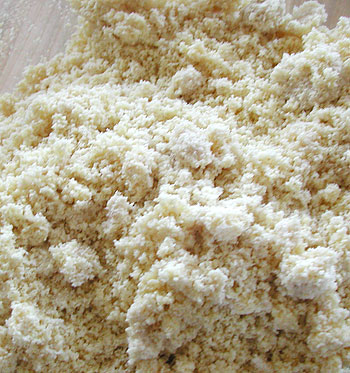
This is what fresh okara looks like.
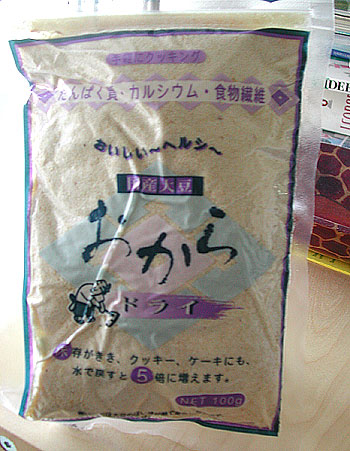
Dried okara is also available in Japanese/Asian food stores. Here's a pack, that proclaims its nutritional benefits.
The easiest way to preserve okara is to freeze it, but I prefer to dry it and keep it as a powder. Spread fresh okara out on baking sheets, and dry in a low oven, turning every 15-20 minutes or so. Once it's totally dry, it may be a bit lumpy so whirl it a bit in a food processor to make it finer in texture, then pack into airtight plastic bags.
Using reconstituted or fresh okara
To reconstitute dried okara for use in various foods, simmer until it's soft and smooth in water or milk, then drain in a fine mesh sieve to get rid of excess moisture.
I have found that fresh or reconstituted soft okara lightens the texture of any food it's added to. I've posted a recipe for Asian sweet and sour meatballs with okara and tofu mixed in with the ground meat. Okara can also be added to Italian style meatballs that are simmered in a tomato sauce, at the ratio of about 4 parts meat to 1 part fresh or soft/reconstituted okara. However, adding okara straight to meat sauce doesn't work - it makes it oddly grainy in texture.
Another way of using okara is to add it to polenta. Just add about 1/2 cup of dry okara to 1 1/2 cups of dry fine-ground cornmeal, and then cook in 4 cups of milk with 2 chopped garlic cloves until soft and smooth. Add salt and pepper and lots of grated Parmesan. Somehow the okara makes the polenta creamier.
The traditional Japanese way of eating okara is to flavor it up by stir-frying it with dark sesame oil and soy sauce, then to mix it together with vegetables or put it into a soup.
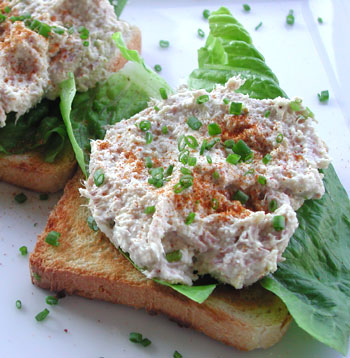
Fresh/soft okara is used in this tuna salad recipe. Again, the okara lightens up the texture. Be sure the okara is totally soft and smooth before you use it.
Open-faced okara and tuna salad sandwich
- 1/2 cup of soft okara
- 1 can (200g / 7 oz) can of tuna packed in water
- 4-5 Tbs mayonnaise
- 1 Tbs Dijon style mustard
- 1 Tbs lemon juice
- 1/2 tsp salt
- A few grinds of black pepper
- 2 Tbs. finely chopped green onion
- Dash of sweet paprika
- Lettuce leaves
- 6 slices of toast
Mix together the soft okara, drained and mashed up tuna, mayonnaise, mustard, lemon juice, salt, pepper and 1 Tbs. of the green onion until smooth. Place the lettuce leaves on the toast, a heaping tablespoon of the tuna-okara mixture on top, and sprinkle each with a little paprika and the remaining green onion.
Using dried okara
Dried okara powder adds an intriguing lightness and texture to baked items. Be sure to use dried okara, not soft/fresh, in baking - the texture comes out a lot better. I think that there are lots of possibilities for using okara powder in gluten-free recipes; I haven't explored this area myself in depth yet.
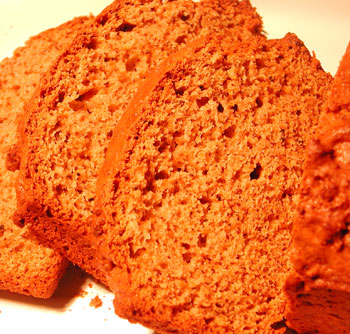
Here is a banana-okara quickbread (that is one that's raised with baking powder and eggs instead of yeast) that I adapted from a banana-coconut bread recipe in Bernard Clayton's New Complete Book Of Breads, using toasted okara and brown sugar instead of coconut and white sugar. It's light, a little sweet, nutty, and very delicious. It's not gluten free since it does use regular white flour.
Banana-Okara Bread
- 1 cup dried okara
- 1/4 cup (50g, or 1/2 stick) unsalted butter, softened
- 3/4 cup light brown or raw sugar
- 2 eggs
- 1/4 cup milk or soymilk
- 1 tsp almond extract
- 1 tsp lemon juice
- 2 cups all-purpose flour
- 1 tsp baking powder
- 1/2 tsp baking soda
- 1/2 tsp salt
- 2 medium ripe bananas, mashed
Pre-heat the oven to 175°C/250°F. Grease and flour a loaf pan.
Heat up a non-stick frying or sauté pan. Toast the okara, stirring frequently, until it's a golden brown in color. Let cool.
Mix together the butter and sugar. Add the eggs and milk or soymilk, almond extract and lemon juice. Add the mashed bananas.
In another bowl, stir together the flour, baking powder, baking soda and salt.
Add the wet mixture to the dry mixture, mixing just until it's combined. Fold in the okara.
Put the batter into the loaf pan. Bash the loaf pan hard on your work surface - this settles the batter and gets rid of any large air pockets. Bake for about an hour, until it's toasty brown in color and a skewer stuck in the middle comes out clean.
Take out of the loaf pan and let cool before slicing.
Note: you can also bake this as muffins, in which case the baking time will be much shorter (about 20-25 minutes).
Okara, the next In Food (maybe)
I have only started to scratch the surface of the possibilities of okara myself. It's so good for you that it has all the star power, I think, to become a Trendy Nutritious Food with claims that it can cure all human illnesses. (It can't, of course, but you know how these things go.) In any case, I am first and foremost about taste. If I find or develop more okara recipes that I really like, I will post them here in the future. At the moment I'm working on a müesli with toasted okara in it...
Submitted by maki on 2006-04-08 14:36.
If you enjoyed this article, please consider becoming my patron via Patreon. ^_^
 Welcome to Just Hungry, where we serve authentic Japanese recipes and more! I'm







Comments
melissa_cookingdiva
9 April, 2006 - 18:35
Permalink
Milking The Soy Bean, Part 3: Okara
Very interesting post! Thanks for sharing the info and recipes. Happy cooking,
M
goodwomn43
24 February, 2016 - 01:51
Permalink
GREAT- Thank U!!! Milk, Tofu and Okara!
Due hubby's cancer (now gone), my chronic joint inflammation, 5 stents, one heart attack and type II diabetes. Yep we finally go the hint's :). We are eating very differently. I have read so many things on the net... some are outright contradictions to the very next article or video. Further, some are horrible and we could barely eat them.
Your page(s) and steps so well written and I do so appreciate your efforts. I have never responded to a page before-nor have I subscribed...I am going to try to do both for you. Here comes the stalking.lol (kidding)
Thank you!
XO, Suzie
Matthew
10 April, 2006 - 19:05
Permalink
Milking The Soy Bean, Part 3: Okara
In Susan Fuller Slack's "Japanese Cooking for the American Table," she suggests making "Sugar and Spice Okara" by drying out 3 cups of fresh okara and mixing with 3/4 cup brown sugar, 1/2 tsp ground cinnamon, a pinch of salt and 1 tsp vanilla extract. She suggests it be used as a topping for hot cereal or baked on top of muffins. I haven't tried it, though, so I can't attest to its taste.
maki
12 April, 2006 - 19:00
Permalink
Milking The Soy Bean, Part 3: Okara
Matthew, I have tried making that sort of 'okara granola' type thing. It's not bad, but it's a bit like toasted sawdust to me (well, maybe a bit better). To make it edible I've found it's necessary to mix quite a lot of sugar into it. When toasted okara is mixed into a batter or bread dough it does seem to be better. I'm going to try toasted okara in a muesli like mix and see how it goes.
Robert, I will reply to your email later!
christine
29 June, 2006 - 22:33
Permalink
Milking The Soy Bean, Part 3: Okara
Do you know if Okara is good for / liked by chickens?
Debbie
25 May, 2009 - 23:57
Permalink
Re: Milking The Soy Bean, Part 3: Okara
I found an article in Countryside that talked about giving soy to chickens in the winter months to keep up egg production. It said that it is real important to cook the soy bean mixture (okara) for 15 minutes before giving to chickens. There is a chemical that is hard on their stomach linings and undigestable unless it is cooked (boiled) for 15 mintues. Hope that helps!
anon.
13 January, 2013 - 22:16
Permalink
Re: Milking The Soy Bean, Part 3: Okara
I feed okara to my chickens everyday. I mix greens, oatmeal, granola, or grits into okara and the chickens eat it.
maki
30 June, 2006 - 13:16
Permalink
Milking The Soy Bean, Part 3: Okara
Christine, some googling came up with this:
http://www.fasc.net/applications.htm
Their studies show that dried okara can be used for chicken feed. (the part about dried meat parts also being suitable as chicken feed make me squirm, but okara is good!)
Shannon
15 January, 2007 - 03:52
Permalink
Milking The Soy Bean, Part 3: Okara
how about soy wax? i think Okara is in it and want to make my own for candles and balms but am not sure.
Shannon
15 January, 2007 - 04:01
Permalink
Milking The Soy Bean, Part 3: Okara
you could vaccum-seal the okara, then freeze it. it would keep much longer then.
paul
26 February, 2007 - 21:23
Permalink
Okara usage
I have never made soy milk, but have experimented plenty with nut milks. I have found that the leftover solids work great for making crackers. I especially enjoy using the crackers that I make to replace matzah in a matzah ball soup that ends up being a cross between indian lentil and jewish matzah. I think the okara left over from soy milk might work famously as such also.
maki
28 February, 2007 - 04:12
Permalink
okara matzah
I will definitely have to try that Paul...I can't seem to get matzo meal here in Zurich so easily (well..not at all so far, though I'm sure it must be sold somewhere since there is a Jewish community here) and I just love matzo ball soup. Thanks for the suggestion!
paul
5 March, 2007 - 20:41
Permalink
okara granola
Maki,
I made my first batch of soy milk this morning, and am cooking the crackers from the okara right now. it is working out just like the nut milk crackers :) my suggestion would be to just undercook them so that they come out with a consistancy slightly closer to flat bread than crackers, this makes it easier to just send them through a food processor instead of having to grind them up. also, let your imagination run wild: add carrots or peppers to the crackers, flax seeds are also great, and garlic of course. as for your earlier comment about the okara granola, don't try to make the granola purely out of okara. make a regular batch of granola with oats, a sweetener (honey, syrup, molasses etc.), and a little oil, then add the okara to that for extra nutrition. i recently made a batch of ginger granola which i added soy to; thumbs up. other necessities for granola if you want it to cluster are a tad of nut butter and a little bit of jam or marmalade. hope these tips help you out.
peace, love,
paul
maki
6 March, 2007 - 01:42
Permalink
great ideas
Great suggestions for using okara - thanks Paul!
Paul Motoyoshi
21 January, 2008 - 01:02
Permalink
Okara Crackers
How do you make okara crackers?
Thanks for your help.
Paul
swapnil M Ghodekar
13 August, 2010 - 18:20
Permalink
Re: Okara usage
Is their any standard process for drying of okara.Means minimum moisture content level for snack food prparation
Mr Scribble
22 March, 2007 - 11:57
Permalink
Milking The Soy Bean
Thanks. How refreshing to read such relaxed yet such detailed and elegant instructions. I particularly like the comment about the cynical health food industry :)
paula Malone
7 June, 2007 - 15:27
Permalink
okara
okara doughnuts are fantastic .. and you can kid yourself that they're healthier than the normal ones.
brilliant site - i'll definitely be back to follow your instructions once i've tracked down some nigari.
Solaan
27 August, 2007 - 11:08
Permalink
tofu-making
Delighted to have your explicit and very helpful information. Budget-minded, too! I've just seen a 'tofu-making kit' offered in UK for 'only (?) $200, complete with wooden mould'. Makes a girl think, doesn't it? Could I use lemon juice as a coagulant? Nigari is moon dust where I live.
Thank you again.
Sous-pirate
1 October, 2007 - 10:05
Permalink
Find a homebrew shop, or one
Find a homebrew shop, or one online and use brewers gypsum. It works just as well and you will notice no taste difference. For 400 grams of dry soy beans I use 20 grams of gypsum.
anon.
18 March, 2008 - 21:28
Permalink
tofu kits for $24.99 - nigari and gypsum too
http://www.soymilkmaker.com/tofubox.html
We sell nigari in 16 ounce bags and gypsum in 12 ounce bags. The price for both coagulants is $9.99 per bag. Shipping & handling is $4.99 for each order.
solaan
2 September, 2007 - 01:37
Permalink
uses for okara
I have fresh okara for breakfast, mixed with a little cinnamon and honey. You could add milk if you wish. I've frozen some in bowl-size portions.
Tonight I mixed tofu with tomato, onion, cheese, etc and filled some red peppers. Before baking, I mixed dried okara with grated cheese and used it to top the peppers. You could use dried okara in any gratin instead of breadcrumbs.
Following from that, I'm going to use it to coat some pork fillets tomorrow, like a schnitzel - egg and dried okara instead of egg and breadcrumbs.
This is really fun! Thank you!
oks
30 April, 2010 - 09:49
Permalink
Re: uses for okara
I also love to eat okara for breakfast. I try not to squeeze too much milk out of it before sending it off to fridge, so it stays moist and crumbly. I find it tastes very similar to ricotta cottage cheese. Love to mix mine with flax, walnuts, goji berries, all kinds of seeds and top it with Cacao & Chili spice. Amazingly tasty!
aellath
21 October, 2011 - 17:01
Permalink
Like Ricotta?
Really? i wonder how it would do in calzones and stromboli . . . i love them, but haven't been able to find a good ricotta substitute. crumbled tofu with lemon or salt just doesn't do it, though the finish product is edible and tasty. h'mmmmm
Paul Motoyoshi
21 January, 2008 - 10:05
Permalink
Okara Crackers
I'd like to make okara crackers, and would appreciate a recipe and suggestions. Thanks so much!
Paul Motoyoshi
Barbara Smith.
31 August, 2008 - 22:22
Permalink
Okara Crackers
May I be provided with the Okara cracker recipe and any added information. I recently made my first two batches of soy milk and then tofu. Since I do not want to waste the nutritious Okara the cracker recipe would be a great addition to complete the soy milk/tofu journey.
Bronwyn
6 April, 2008 - 01:00
Permalink
Okara
I just made some tofu for the first time yesterday. Amazing - out of such a little bag of beans you get vast quantities of okara and tofu!
I have put some okara in bread, and in muffins. Nice and nutty in the muffins, but didn't make a huge difference to the bread other than make it "high fibre" and presumably healthier.
I'm thinking it might be OK to use instead of breadcrumbs for fried chicken or Wiener schnitzel. I'll have to have a go.
PJ
23 April, 2008 - 23:08
Permalink
Okara 'Houmous'
So, if you blend up 2 garlic cloves, and the same amount of peeled ginger, with oil (with a small bit of chilli oil and sesame oil) and tahini you get an 'asian houmous'. My girlfriend much approves of this sort of Okara useage! I'll try making some Okara pancakes and report back as to how I get on...
Thanks all for your informative and helpful posts...
Jim
31 May, 2008 - 04:50
Permalink
Milking the Soy Bean
Hello Maki,
Your articles on Milking the Soy Bean were wonderful. I had a collage student from Taiwan staying with me and we made Tofu following your directions. It was easy and came out perfectly. Brian said, "It is just like my grandmother makes." He cut it into one inch squares and fried it on all sides in a small amount of lard in a wok. I don't like store bought Tofu but yours was wonderful.
Thanks again for sharing.
James Peters
zanox
27 June, 2008 - 19:48
Permalink
banana-okara bread
Hi Maki!!
I've tried the recipe for banana-okara bread and it turns out very fabulous! My mum likes it very much and she doesn't expect that the bread was made from soy bean fibers. I'm now more determine to venture the great possibilities from okara. Thanks so much for the great recipe!
Regards,
Zan Zafirah
yannie
18 September, 2008 - 14:54
Permalink
ways to use okara
^^ you use of okara after making soy milk is great as its always such a waste throwing it all out when you can really use the stuff. My mum makes carrot cake with the squeezed out fibres whenever we make carrot juice too!
For some reason the okara looks to me like its make good breadcrumb substitute for fried foods like tonkatsu or crumbed fried prawns - what do you think? hehe also i think itd make a good mask and scrub binding material with honey oats and egg white @_@
lylian
14 November, 2008 - 15:14
Permalink
use as rabbit feed and compost
In answer to the question whether chickes will eat Okara, I wouldn't be surprised if they did. I've given a couple of tablespoons of uncooked okara to out 2 rabbits at home. They seem to love it. But we don't give the rabbits too much okara because we don't know if they may suffer from any adverse reactions but so far, so good.
The rest of the okara I bury in our vegetable garden. The earthworms love it. So I think the okara make good compost and natural fertiliser.
anon.
28 November, 2008 - 14:13
Permalink
in korea..
they use fresh okara ('biji' in korean) to make a stew/soup thing. It's pretty much a kimchi jjigae with okara. It's really good and one easily consumes a bowl of rice with this stew!
anon2.
20 December, 2008 - 00:34
Permalink
Pancakes
I like to use about 2Tbsp of fresh okara in denser 3-4 person pancake recipes for fluffy pancakes.
They seem to fluff normal pancakes overly much, unfortunately, though some people might like that if they're interested in doughy fluffballs for breakfast.
The banana bread recipe looks intriguing.
Narci
19 January, 2009 - 18:12
Permalink
Re: What to do with Okara (Milking the Soy Bean, Part 3)
Hey Maki,
I'm new to making my own soy milk; so new, in fact, that I've yet to actually start the first batch. :P
Do you think that okara would go well mixed in with quinoa or rice as part of a pilaf? The texture of the fresh okara looks a little bit like fine cous cous or amaranth - is this an accurate description of its consistency?
maki
20 January, 2009 - 00:12
Permalink
Re: What to do with Okara (Milking the Soy Bean, Part 3)
The texture is really not like amaranth or couscous at all. The closest thing I can think of is the fiber that is left behind in a juicer after you have juiced some vegetables. I know that may sound rather disgusting, but it really isn't. I guess you can certain try putting it into a pilaf.
pickles
23 January, 2009 - 08:35
Permalink
Re: What to do with Okara (Milking the Soy Bean, Part 3)
aloha from HAWAII!!! my FIL is from KUMAMOTO, JAPAN and they eat something called KARASHI RENKON. i make it for him and using dried okara mixed with miso and hot mustard powder which i stuff into the peeled and parboiled renkon (lotus root) holes. after that i dip the whole thing in tempura batter and deep fry. when it's done and cooled i slice into wheels. yummy! i am still researching tofu making so i stumbled across your site - thanks for all the useful information. i usually buy fresh hot okara at the tofu factory when making KARASHI RENKON. i never knew what to do with the rest of the huge bag i buy for mere cents. thanks for all the helpful hints! i'm thinking of using as a filler in my turkey meatballs.
AsperGirl
3 March, 2009 - 11:45
Permalink
Re: What to do with Okara (Milking the Soy Bean, Part 3)
Ellenskitchen.com has a lot of okara recipes posted, along with the note that tempeh starter can be added to the okara, to make okara tempeh. Since true fermentation would transform the texture and flavor, that sounds like a great idea. Also, I think I've read elsewhere that fermented soy products are more nutritious than the unfermented, but I think that was in reference to miso, and I don't know if the type of starter (microbe) used changes that.
Ratih
20 April, 2009 - 03:55
Permalink
Re: Milking the Soy Bean, Part 3
Its great!
Thank you so much Maki! I make it this morning with your method. Its easy and all my kids and husband love it. I will make it every day. Now I will do try the banana bread from okara.
Bien
24 April, 2009 - 07:05
Permalink
Re: What to do with Okara (Milking the Soy Bean, Part 3)
Thank you for your interesting article.The use of Okara is very interesting and inspireing. I still haven't been able to find coagulater net shop who wants to ship to Denmark, but I keep trying.
sarves
22 May, 2009 - 18:24
Permalink
Re: About vegetraian Meats
Greetings, I am a vegetarian from Malaysia. I run a small sized vegetarian outlet. I use a substantial amount of mock meats (meats that from soya/wheat products). namely vegeterain Chicken/Fish. My question is does any one know how i can process soya pulp into somewhat like the vegetarian meats?
TQ
kizzle
24 May, 2009 - 16:33
Permalink
Re: What to do with Okara (Milking the Soy Bean, Part 3)
I don't anything about any of this, so this may sound totally stupid...
Okara is, in essence, just really ground up, rehydrated, dried soy beans, right?
Well, why not use them in anything that uses beans?
I think (again, not knowing ANYTHING about soy beans) that you could use them in the following:
Chili
Refried beans (which are whole cooked beans, then mooshed up. This would just be reverse order...)
Jambalaya
Red Beans and Rice (Red beans, soy beans, the diff might be good!)
Pasta e Fagioli
Meatloaf
Stuffed Peppers
I've seen soy milk, but don't think I've ever tried it. Use soy flour in my baking, eat Edidame, tried tofu (umm...no comment). So again, I may not be suggesting anything of use, but thought that if I DID use soy, and had this stuff, that would be the recipes I'd be trying it with...Oh yeah, Swedish Meatballs. I bet they'd be good with Okara instead of flour.
The reason I'm here, is I'm into Sourdough bread, and I once read how in India, they use the water from Udal(sp?) lentils to make a sourdough bread, and that if you want to have a better chance at successful sourdough, use the udal water, and it will be like steroids for your sourdough. The search engine pulled part of this article as a top hit...
Which brings up the point that if you DO bake, and DO use sourdough, you might try using a bit of soy milk in your sourdough starter...I wonder if I could use a bit of tofu...
Well, I'm off to keep hunting for Sourdough with Bean Water iinformation. Have a gread day, all, and eat healthy for me!
~Kizzle
maki
27 May, 2009 - 18:28
Permalink
Re: What to do with Okara (Milking the Soy Bean, Part 3)
Okara is actually the ground up hulls and fibre of the soy bean after most of the protein and fat is extracted, in the form of soy milk. So it isn't quite the same as the whole bean. I've tried making chili or spaghetti sauce with okara instead of or with meat...the results were not too successful...rather fibrous and saw-dusty in texture.
anon.
27 May, 2009 - 04:49
Permalink
Re: What to do with Okara (Milking the Soy Bean, Part 3)
Have you considered making Hummus with the Okara ? You could replace the chick peas in the recipe with the Okara.
I've made Hummus using different kind of beans including Red Kidney beans and Black Turtle beans.
maki
27 May, 2009 - 18:11
Permalink
Re: What to do with Okara (Milking the Soy Bean, Part 3)
Interesting idea, though it will not have the creamy texture that hummus has. Will have to experiment!
Peter
8 July, 2009 - 14:26
Permalink
Re: What to do with Okara (Milking the Soy Bean, Part 3)
There are some good recipes for using okra in an old recipe book produced by The Farm in Tennessee. The one I like best is called Soysage.You mix okara with a little flour (wheat or gluten free)and rolled oats, add soysauce,spices,diced veg (optional), oil and salt.The mixture should be like a moist scone mixture. Then pack it into individual oiled containers and steam in a pressure pot or a closed pot of water. We use stainless steel beakers, which we stand in a few inches of water in the pressure pot and cover the tops with tin foil.When well cooked (about 90 minutes in a pot, 30-45 minutes in a pressure pot) remove and cool. Then tip out your steamed soysages. They can be sliced into burgers.They have a slightly bready but delicious texture, and of course they are very nutritious.
jolivian
21 January, 2012 - 19:13
Permalink
Re: What to do with Okara (Milking the Soy Bean, Part 3)
Ohhhh, I haven't had soysage in years, but I do remember it being very good & you can flavor it lots of different ways, depending on what you use for spices. Easy to make & good to eat - another reason to make tofu at home!
leica
26 July, 2009 - 15:02
Permalink
Re: gypsum,
i tried buying gypsum or calcium something but i can not gwt it here. Baguio Phil. I love tofu, taho I tried making taho and placed gelatin for coagulant but for tofu I know that won't do. i was told that apog or lime will do but do not know the proportion. pls. help. I also tried okara in meatballs, pancakes and breakfast drink (okara,milk, oats, cereals) i use instant oats and blendered cereals. it is very good for breakfast or night drink. you can also put honey or brown sugar.
orbiter
7 October, 2009 - 04:19
Permalink
Jump on the okara diet bandwagon
You can make okara cookies which is the rave in Japan - the tofu/soypal cookie diet I think it's called? There's also a cute donut shop in Japan that boasts of okara in its goods as a health gimmick (hara donuts).
Apparently okara absorbs water and thus is supposed to make you feel fuller and eat less. who knows. :)
cyrell
29 December, 2009 - 18:23
Permalink
Re: What to do with Okara (Milking the Soy Bean, Part 3)
I made a nice paste out of okara for use in hearty dishes.
Just mix the okara with some raw miso where the little helpfull fellas are alive, add salt to taste, spices and put all in a big clean glas to ferment.
I think one of the clay pots for fermenting vegetables would be good, but also mixing the okara every day to prevent molding just like with the rice bran vegetables is nice.
I had luck with mixing the okara in the glas everyday and after some days when you had the distinct flavour of miso in your nose i added some oil on top and closed the glass for good and stored it in my kitchen board.
And now i know why the miso manufacturers use heavy weights on the lid...because there is gas produced which will shove the stuff higher and higher just like rising dough and if you are not prepared it will greet you in the morning from the top of the board.
I have the paste since a year in my kitchen board, still fermenting and getting more liquidy and darker...
Not really more liquidy, but the small pieces which were not grinded completly are now dissolving and giving it a smoother look
carmen wong fisch
16 February, 2010 - 23:56
Permalink
Re: What to do with Okara (Milking the Soy Bean, Part 3)
I make mini soya burgers out of Okara. THEY ARE SO YUMM. My husband doesn't like tofu or soya milk, but he LOVES the soya burgers. Sautee some onion, garlic, then put in the okara, add spices like curry, chili, pepper, salt, sesame oil, add an egg and some water to help the consistency, it should be able to stick together to form the burgers. Then, let it cool down, then use your hands to form a little patty, then fry them in oil until brown, let rest on napkins to soak up extra oil. It smells and taste soooo yummy that you won't believe it's stuff you were going to throw away.
Your websites give me so much! I am a chinese girl living in Basel, Switzerland too. So you can understand me very well. AND I love Japanese food!! THANK YOU SO MUCH!!!
morgen
10 March, 2010 - 12:54
Permalink
Okara Nut Burgers
Many Thanks for your excellent information !
I have been making bean/nut burgers based on recipes in the book of vegan recipes called "The Thrive Diet" that I change depending on what food is in the house - and the okara works VERY well in the mix.
I also always add the pulp from my fresh juicing - as the cost of the organic veg makes it too precious for the compost heap!
Here is the basis of my last batch that turned out well:
1 cup almonds that were soaked in water over night then drained and 'magi- mixed' to a pulp ( or pecans, or walnuts etc)
2 cups okara
2 cups juice pulp
1/2 cup cashew nuts or sunflower seeds gound fine in 'magi-mix'
1 cup fresh ground flax seeds ( I use my electric coffee grinder ) - this is the MAGIC ingredient as the ground flax really holds together the more crumbly ingredients!!! ( and is also extremely healthy as is high in omega 3, lignans etc)
1 cup fresh mung bean ( or any sprouts) 'magi-mixed' to a pulp
2 crushed garlic cloves
can also add 1 cup breadcrumbs
To this you can flavour it up any way that suits you. ( Note that i do NOT add salt for health reasons, though they DO taste better with salt !!!)
For example, a "Italian-ish" version add:
1 cup tomato puree
2 teasponns orgegano
1 teaspoon thyme
Spicey version:
lightly cook in 4 tablespoons of canola or coconut oil:
1 teaspoon chilli powder ( or more to for hot spice!)
1 teasppon turmeric
2 teaspoons fresh ground cumin
1 teaspoon corriander fresh ground seed
1/2 teaspoon cinnamon powder
Then add the flavourings to your burger mix.
I eat this raw like a nutty pate ( to preserve the enzymes in the raw food)
You can also form individual burgers and oven bake ( as a healthier alternative to frying)
The mix also works VERY well as a solid 'log' which I roll in unbleached baking paper and leave overnight in the fridge to set. It can then be cut into slices.
A really tasty sauce for this is to simply magi-mix sundried tomatoes in olive oil, with or without a few un-pipped olives.
................what's not to like!?!
If anyone has managed to find a CRACKER recipe I would also be very grateful. I have read that there are a few of us keen to try Okara crackers.
MANY Thanks !!!
ann crusch
14 March, 2010 - 03:31
Permalink
Re: What to do with Okara (Milking the Soy Bean, Part 3)
check this out
http://blog.fatfreevegan.com/2006/07/okara-crab-cakes.html
they are "crabless" cakes from blog.fatfreevegan.com. using the okara. thanks for the soymilk recipe.
sirdanilot
13 April, 2010 - 09:48
Permalink
Re: What to do with Okara (Milking the Soy Bean, Part 3)
Okara is a traditional ingredient used in Korean Kongbijijigae soup (funny word, isn't it). This is a very healthy and also a very delicious way to use it up.
Here is a recipe for it (she uses ground up soybeans rather than real okara, but the more traditional way is to just use your okara. You may want to add more stock since okara is quite thick):http://www.maangchi.com/recipe/kongbiji-jjigae
Mat P
6 June, 2010 - 18:04
Permalink
Re: What to do with Okara (Milking the Soy Bean, Part 3)
Interesting read. I tried the sesame oil and soy sauce addition and found the texture still a bit too granular but liked the taste.
So, I started off with one egg whisked, added around 2-3 tablespoons of fresh okara*, a tablespoon of soy sauce (made it a touch salty so maybe a teaspoon would be fine), and a few drops of sesame oil. Poured as thinly as possible into a large flatbottomed pan on a medium heat and fried, trying to shake the pan rather than stir it so the pieces remained large. After a few minutes and slight browning it's done. While hot it has a slightly cheese-like texture which was a bit more my liking.
* fresh okara from the maker with around 1-2 tablespoons of the milk 'silt' - the last few tablespoons from the fresh soya milk is a bit thicker
tempeh monger
22 July, 2010 - 01:36
Permalink
Re: What to do with Okara (Milking the Soy Bean, Part 3)
Hi I'm from Indonesia, people from our West Java province process okara to make Onchom. They use Neurospora instead of Rhizopus.
andymakesamess
12 September, 2010 - 23:16
Permalink
Re: What to do with Okara (Milking the Soy Bean, Part 3)
I love this site.
Okara makes phenomenal vegan burgers. I like to mix it in instead of panko or other bread crumbs. Generally I do a lentil or garbanzo and black bean burger.
I've also mixed it up with bread crumbs for extra protein in fried seitan.
I've been thinking about blending it with a vegan bouillion (better than beef is my rationale) and making little patties I can then tempura fry. I've also been playing around with ways to make mock shrimp, and I think okara might be it, blended with a bit of tofu, some seawater and kombu broth, and then piped and baked into little shrimp shapes.
All in all, if you have a vegan friend and you make your own tofu or soy milk, give them the okara (and some tofu and soymilk. We'd love you forever). The protein is priceless in a meat-free diet. I've found it takes flavors really well and is useful for texture in mockmeats. Grinding up seitan and mixing it with okara makes some delicious vegan sausages.
In non-food uses, if I make a lot of soymilk and just can't use all the okara, I like to mix it with coffee grounds and use it as a fertilizer for my herb garden. I don't have the ability to compost in my little apartment, but if I could, I'd probably throw it in there too.
One other thing I've been thinking about is using it as a base for growing oyster mushrooms.
Amy
25 September, 2010 - 09:51
Permalink
Re: What to do with Okara (Milking the Soy Bean, Part 3)
Love all 3 parts of this post. My local asian market looked at me strange when I asked if they had the coagulant (used every name you gave it here) and this was after I looked at everything myself. I ended up trying citric acid since it is used as a coagulant oftne to make soft cheeses. It worked. I think I used a bit too much and the tofu had a slightly sour flavor, but even that was good. I found that rinsing it and changing it's storage water often helped reduce that taste. One thing though, I'm about to try the banana bread recipe with the okara, you said that 175 C is 250 F. It's 350 F (which is a pretty normal baking temp). You may want to correct that so someone doesn't make a long cooked banana soup. Love the site!
J.T. Hats
1 October, 2010 - 06:19
Permalink
Re: What to do with Okara (Milking the Soy Bean, Part 3)
Very nice article. I haven't cooked with okara (or made my own tofu) for years but during one of my poorest periods I subsisted on homemade tofu, okara baked goods, brown rice and alfalfa sprouts and did pretty well. I liked the okara best in doughnuts (okara and whole wheat flour) but have to warn anyone who tries it, that's a lot of fiber and if you eat too many it's like a very long bristle brush working through your digestive system. Cleans you out thoroughly. I suppose that's a good thing.
Milady
7 November, 2010 - 01:16
Permalink
Re: What to do with Okara (Milking the Soy Bean, Part 3)
This is absolutely fascinating. I had no idea! I'm so curious to try it now, might have to try and make some. Amazing how much goodness comes out of those beans. Thanks for writing this!
Phoenix Turley
1 February, 2011 - 04:10
Permalink
Re: What to do with Okara (Milking the Soy Bean, Part 3)
What kind of silly person reads dozens of recipes about what to do with Okara... me! This was so cool... Thank you for the article. I had misplaced my copy of The Book of Tofu...
Colleen
10 February, 2011 - 00:00
Permalink
Re: What to do with Okara (Milking the Soy Bean, Part 3)
I use it to make shui mai, a dim sum dumpling. I use fresh okara.
I saute up in peanut oil some chopped mushrooms, finely chopped onions, garlic, ginger, 5 spice powder and some hot red chili peppers, add to the okara with soy sauce and rice wine vinegar to taste. Put about a teaspoon full in wonton wrappers and fold up the edges to make little baskets. Place in a bamboo steamer and steam for about 12 minutes or until wonton wrappers are opaque. Eat hot with soy sauce and rice wine vinegar. YUM!
Emilie
19 February, 2011 - 13:15
Permalink
Re: What to do with Okara (Milking the Soy Bean, Part 3)
My okara crackers turned out fabulous. We spread lemon tofu on some of them and Smart Balance on others and ate them all up in one day. They come out about 2" by 7". Check out my blog for pictures and for info on making tofu using lemon juice http://www.healtheducationcom.blogspot.com/
My own recipe for Okara Crackers:
1 cup okara
1 cup whole wheat flour, plus more for coating
4 T toasted sesame oil
1 t. salt
water
Mix the first 4 ingredients and add water as you mix till it all sticks together in a nice solid lump -- kinda like pie crust. Knead it a bit. Cut it into 1 inch cubes. Roll them out into crackers like this: spread out whole wheat flour on your flat surface and place the piece of okara on it. Roll in one direction with a rolling pin or jar to make a strip, then flip and roll again. That coats them with ww flour and makes them nice and thin. Put them on a cookie sheet and they can slightly overlap. Toast them in a 350 degree oven for 1 hour then change the temperature to a 200 degree oven for 2 to 3 hours or till they are totally crisp, crunchy and dry. Turn them and rearrange them every 20 to 30 minutes.
P.S. The whole wheat four I used for these crackers was made from dehydrated wheat sprouts. I sprouted wheat berries, fully dehydrated them and then ground them up.
Let me know if you try this. Emilie.v.parker@gmail.com
anon.
17 March, 2011 - 15:26
Permalink
Re: What to do with Okara (Milking the Soy Bean, Part 3)
I dry out okara to preserve it, and then use it as a substitute for minced beef in recipes such as bolognese. It rehydrates well and creates the right kind of texture. I used to buy "soya mince" from the supermarket for that purpose, until I realised that I could get the same thing as a byproduct of making my own tofu!
I've also made okara and sweet potato burgers, which turned out very tasty :)
I actually find dried okara pleasantly crunchy to eat on its own, or even better, with yoghurt and fruit.
Sharan
9 April, 2011 - 14:23
Permalink
Re: What to do with Okara (Milking the Soy Bean, Part 3)
Nice write-up!
I've just got a soya milk making machine, and have started making soya milk every day. I've been wondering what to do with the okara that I filter out every day.
Drying it in an oven for 30 minutes seems a lot of work and a waste of electricity if I have to do it every day.
Now I have an idea: I'm going to stop filtering the soya milk, and simply drink it up, okara and all. It will feel slightly grainy, but that's not a problem :-)
J
7 July, 2011 - 18:05
Permalink
Re: What to do with Okara (Milking the Soy Bean, Part 3)
I don't know if anyone else has mentionned this, but okara can be made into some AMAZING foods with just a little creativity. I make my own soy milk, so I have tons of the stuff (all cooked and ready to eat) left over and I freeze it. For a while, I moaned about it and even thought I'd have to give it away. Then I remembered that I'm a creative guy, so why not climb outside the box.
One of my new favourites is using it as a sushi base. It's easy and low in carbs (one cup of rice= 43 carbs; one cup of okara= about 15 carbs!).
Simply about two cups of boiled okara and put it into a skillet or wok with a light oil and mix it with garlic powder and and about three sliced scallions. I like to add a copious amount of onion powder and cumin, but that is just me (I like LOTS of flavour). Once the scallions have wilted add about three tablespoons of vinegar (I use white vinegar, but I bet sushi vinegar is better). Now add soy sauce to taste.
You now have your sushi "rice". It's lower in carbs than real rice, extremely fibrous and MUCH easier to make than REAL sushi rice.
Take a seaweed sushi wrapper, put it on a sushi mat and spread the okara thinly in the centre leaving a border of about an eight of an inch. Don't pack the okara too high. It will make rolling harder. Now add your favourite "sushi innards" (tuna, squid, sprouts, cucumber strips, bicycle chain filings... whatever floats your boat). Then tightly roll the sushi using the sushi mat.
You will need a VERY sharp knife to cut this into sections, but you can serve this either chilled or as is. It's incredibly tasty.
maki
7 July, 2011 - 21:57
Permalink
Re: What to do with Okara (Milking the Soy Bean, Part 3)
Okara sushi rolls actually sound rather tasty ^_^
Martha
20 September, 2011 - 12:23
Permalink
Okara Questions!
Hi Maki,
Looking for ways to incorporate more okara into my diet (especially since I'm living in Japan now and can get it VERY cheap!), I stumbled across a website that offers okara recipes: www.okara.jp.
A lot of the recipes show a lot of promise, but none of them specify what kind of okara (dry or fresh) that is used. In many cases 華おから is listed, other times just おから. None of my Japanese friends here use a lot of okara in their diets and so could not help me figure this one out. I was hoping you might be able to shed some light on the matter!
You mention that baking uses primarily dry okara, but some recipes talk about microwaving the okara to reduce the water content (or at least thats how I translated it...) ><
Hope you have a chance to answer, and maybe this website will give you some new ideas for what to do with okara! (or ways to modify what people have already offered!)
Thanks!
maki
20 September, 2011 - 19:54
Permalink
Re: Okara Questions!
okara.jp seems to be an okara maker's website actually, and 華おから (ka-okara) is one of their products. They claim that it's richer in soy milk and the okara part is more finely ground than 'regular' okara. I imagine you can just use regular okara in its place, perhaps with added soymilk or even crumbled silken tofu if needed.
Mark Rudd
14 October, 2011 - 02:36
Permalink
Re: What to do with Okara (Milking the Soy Bean, Part 3)
Hi
I presently order 1.5 liters of Soya milk from the Soya Man here in Las Pinas, Philippines, every other day, but I am thinking of making my own.
After reading about Okara, i was wondering if there is any reason, why it cannot be blended and put back into the milk, as long as it is consumed within two days and kept re-fridgerated, taste is not important to me, as i am using it purely for the Protein, bodybuilding.
Any advise why this should not be done, would be very much appreciated.
Many thanks
markjamesrudd@yahoo.co.uk
situationalawareness
10 December, 2011 - 19:02
Permalink
Re: What to do with Okara (Milking the Soy Bean, Part 3)
Having just gotten into soy milk making, and being the creative guy I am with remains, I instantly think of a quick portable snack. You could make akara cookies with stevia, or whatever. The thing is, akara seems a bit too heavy to be easily integrated with the soymilk. Taste or not, you'd end up needing to scrape it out of the bottom by hand (or spoon). It's just easier to run it through a strainer and do what you want with the akara.
If your not terribly worried about taste, you could just take it directly out of the strainer and split it up into groups to be eaten when you want. Definitely not something I'd do, but you said taste is not important... If you go down that road, I'd toss a little sweetener like stevia into it at least.
NaetGal
4 January, 2012 - 19:04
Permalink
Re: What to do with Okara (Milking the Soy Bean, Part 3)
"Okara" the by-product of turning soy beans into soy milk or tofu is the ground up fibrous part of the bean". I loved the info and demon on making soy milk (3 part series). Many thanks. It was just what I was looking for!!!
C made my first ever soy milk; my very first condensed soy milk and my first soy creamer (almond flavour)and they were wonderful.
I then took the okara and dehydrated it in my food dehydrator for about an hour on highest setting as conserving protein is not affected by the heat (as are vitamins when drying herbs and veggies). I then ground them x 3 minutes in food processor. They remained very small granules. Good for topping on cereals and putting onto salads (where they are virtually invisible).
I pulverized some of it in my 'magic bullet" and it went powdery. I will use this for baking and when making soy milk ice creams.
The taste of products from homemade soy is so superior to store bought.
Gita
6 January, 2012 - 04:43
Permalink
Re: What to do with Okara (Milking the Soy Bean, Part 3)
Hi, we have been making our own Soya Milk at home and I decided to use the wet okara and made Corn Bread with it, replacing the dry corn flour that the recipe called for! It came out moist and just perfect! I used the home made soya milk instead of regular milk.
Gita
Pat
5 March, 2012 - 02:18
Permalink
Re: What to do with Okara (Milking the Soy Bean, Part 3)
I just read all three article. Last night I made my first soy milk. It was okay but your recipe appears to be more to my liking. I will try it next. Thanks for the tofu and okara instructions.
Doing all of these myself will definitely be healthier and will help my budget.
Thank you.
heny
10 April, 2012 - 05:57
Permalink
Re: What to do with Okara (Milking the Soy Bean, Part 3)
Hi,your article about okara is very useful..and it helps me to know what I've to do about okara when making soymilk..btw,I want to ask,I read in other blog,they recipe said to use raw okara from soymilk maker and it was said the okara has been cooked by the soymilk maker. I want to know,what if I make the soy milk manually,do I have to cook the okara first, so then I can use it in making muffin,bread, or patty? Or is it the same okara, either it is from soy milk maker or hand made? Thank you so much for your help..:)
maki
10 April, 2012 - 19:01
Permalink
Re: What to do with Okara (Milking the Soy Bean, Part 3)
If you make soy milk in the way I describe in part 2 of this series (link above) then the okara is cooked, prior to the milk being strained.
Lynne
21 April, 2012 - 17:14
Permalink
Re: What to do with Okara (Milking the Soy Bean, Part 3)
I have okara from my soy milk maker, so it is already cooked. I mixed some fresh okara with dill and dried herbs to spread on crackers or bread. And I mixed some with honey and cinnamon for a tasty addition to toast in the morning.
crousemouse in Japan
12 May, 2012 - 08:48
Permalink
Re: What to do with Okara (Milking the Soy Bean, Part 3)
So interesting! I have seen this many times in the grocery store as a side salad. I live in Japan and I eat many foods on a daily basis that I can't identify, but I love!
Today I tried the okara banana bread as muffins in my toaster oven. Adjusted it a little to my cupboard. I love it!! Thanks!
Tom
28 August, 2012 - 05:01
Permalink
Re: What to do with Okara (Milking the Soy Bean, Part 3)
Thanks for the soy bean 1->3 howto:
-I am relatively new to the vegetarian lifestyle and am finding it to be a wonderful adventure. I am curious as to your experiments into cultured soy? I have tried some natto { bacillus_subtilis } but my product versus the commercial natto while being similar, mine does not become as sticky as the commercial natto. I understand that the micro organism that produces natto contains a vitamin K-2 which according to a Netherlands scientist is a vitamin that instructs the body into what to do with calcium. Additionally, it seems, this is a deficiency in most populations thus the body takes calcium from the wrong places and deposits it in the wrong places. Refer to youtube interview { Dr Mercola & Dr.CeesVermeer }.
I am interested in making plant based cultured cheeses. Any clues?
Thanks
Tom
Lyman
24 March, 2013 - 19:08
Permalink
Re: What to do with Okara (Milking the Soy Bean, Part 3)
FERMENTING SOY PRODUCTS.
Tom you can try adding a bit of sugar to give the bacillus subtilis a good boost. I use a pack of Natto as a starter and add a teaspoon of sugar with some water and incubte in my yogurt maker for 24 hours, then in the fridge. Mix it in well with the okara and sugar.
You can also ferment Okara with a Tempeh starter.
Un-fermented soy is not healthy, look it up.
I make soy yogurt with my soy milk too.
And I lacto-ferment soy sprouts with other vegies like in sauerkraut or kimchee.
Would like to see comments from others who ferment soy.
Deb
1 September, 2012 - 12:51
Permalink
Re: What to do with Okara (Milking the Soy Bean, Part 3)
Once I've dried my Okara, using the food dehydrator, I put it in my vitamix machine and grind it to a powder. What I thought I could use it as, is a coating for fried foods...I'm a fish-eating vegetarian and I use Panko very often, so I thought substituting the Panko with Okara might give the food a slightly different taste and texture, adding more nutrients/protein to the food it's coating...what do you think?
Jocelyne
4 October, 2012 - 23:18
Permalink
Re: What to do with Okara (Milking the Soy Bean, Part 3)
Thank you so much for these helpful tips.
selena
28 October, 2012 - 13:07
Permalink
Re: What to do with Okara (Milking the Soy Bean, Part 3)
Hi,
my mom makes a big batch of tofu every second week and uses the okara as a garden fertilizer. She still dumps the stuff in her beets even if it's winter, but I doubt the usefulness (on the other hand I know little about gardening, but that's not the point right now).
While doing so, I read that the new "healthy diet" food in Japan seems to be okara konnyaku as vegetarian meat. there's also a recipe on the net ( http://kitamura-sake.com/okarakonnyaku.html).
I haven't tried it yet, since I wasn't able to find Calcium Hydroxide (pickling lime). But it's supposed to make the konnyaku flour firm. The texture is said to be similar to chicken.
Wanted to share the info, we'll try o adapt the recipe (minus Calcium Hydroxide and maybe the egg).
but since there seemed to be lots of okara enthusiasts here, maybe someone else'd like to try, too :)
Ignas
19 November, 2012 - 19:06
Permalink
Okara as a meat substitution
Okara makes perfect substitution for dishes where meat is might be required e.g. gyoza. My local supermarket sells frozen "vegetable gyoza" which contains no meat, but Okara instead and it tastes amazing!
Betty Holland
1 April, 2013 - 01:24
Permalink
Re: What to do with Okara (Milking the Soy Bean, Part 3)
I use Okara to make the best broth I have ever tasted. I put all of the okara from one batch of soy milk in my slow cooker and add choped onion,green pepper,salt, pepper, and anything else that sounds good. I let it cook for 8 hrs. or more. I use this in every thing I cook needing a bit of sauce. The best use is just a pot of veg. soup. lots of flavor.
noname
31 July, 2013 - 06:02
Permalink
Re: What to do with Okara (Milking the Soy Bean, Part 3)
I was reading through The Book of Tofu and they mentioned that u no hana was a reference to the white flowers of the Deutzia tree. 70s hippie cookbooks might not be the best citation, but according to an online dictionary the kanji for Deutzia is 卯木, so there might be something to it.
Matt
18 August, 2013 - 16:28
Permalink
Re: What to do with Okara (Milking the Soy Bean, Part 3)
I am wanting to make okara miso patê and I am making my soymilk without the use of a soy milk maker so the okara doesnt get cooked at all. I understand that it is not good to eat without cooking... is this true? if so how can i cook the fresh okara to use immediately for patê? i have read soooo many comments and I cant seem to find any help... I would appreciate any suggestions
Jacqueline A Church
23 September, 2013 - 20:22
Permalink
Re: What to do with Okara (Milking the Soy Bean, Part 3)
Storing the dehydrated okara? I am assuming cool dark cabinet but not the fridge? Never had it or used it before but just got a bunch from my Japanese market and am looking forward to experimenting. I dehydradted it because I knew I wouldn't have time to use it right away.
THX
maki
24 September, 2013 - 07:39
Permalink
Re: What to do with Okara (Milking the Soy Bean, Part 3)
You can keep dried okara for a while in an airtight container, but it has some fat in it from the soy milk so it will go rancid rather quickly. So you should use it up as soon as you can. An alternative would be to store it (very airtight) in the freezer.
yourname2000
9 October, 2013 - 11:40
Permalink
Re: What to do with Okara (Milking the Soy Bean, Part 3)
Wow, I only stumbled on this page trying to track down the nutritional information of this stuff. One of my favourite food stores in Vancouver produces a lot of tofu. So when I saw bags of it labeled as "soy fibre", I figured it was a byproduct of that. But at $1 for probably 3 lbs of the stuff, I thought I'd try it. I love this stuff! I wasn't surprised it was 'bland' (I don't find it overly so), but expected it would thicken up smoothies nicely, and it does. But I also just made a 'dessert' of sorts, by mixing in a bit of a Ribena-style fruit juice concentrate and it was delish. I'm really surprised there isn't a lot of use for this. I think it's great 'ready to use' fibre that unlike psyllium or chia doesn't need soaking. Expecting I couldn't use it fast enough, I'm freezing it in ice cube trays to be used a few at a time.
Roky
22 January, 2014 - 07:58
Permalink
Re: What to do with Okara (Milking the Soy Bean, Part 3)
My liquidiser seized (!) halfway through the last batch of preparing for the tofu, which left about a third cup of beans whole. I continued with making the tofu and is now so happy with the result of the pulp having some solid beans in it. It adds to the crunch of any recipe I use it in and in future I will always do it like this! Very nice. Thank you for all the help on this site!