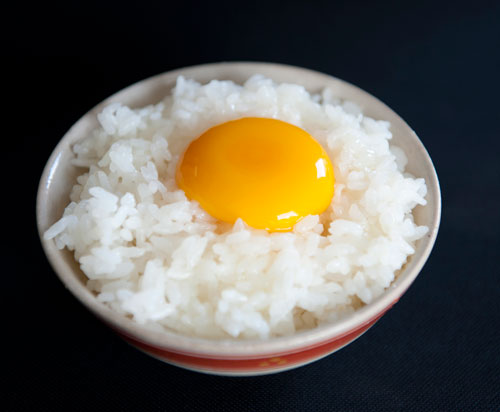
Eggs, plus the history of ranking restaurants and food in Japan.
Filed under:
eggs japan washoku writing elsewhere japanese culture food history japantimes
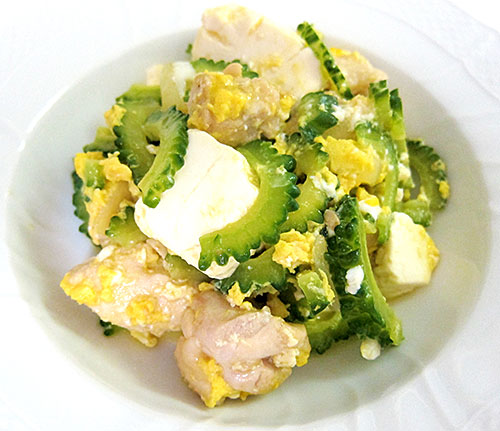
About bitter gourd or bitter melon, called nigauri in Japanese and goya or go-ya- in Okinawan. Plus, a recipe for the most homey of Okinawan dishes, goya chanpuru or champuru.
Filed under:
japanese tofu summer pork okinawa eggs
(From the archives - something cool and easy, perfect for the summer. Originally published in July 2008.)
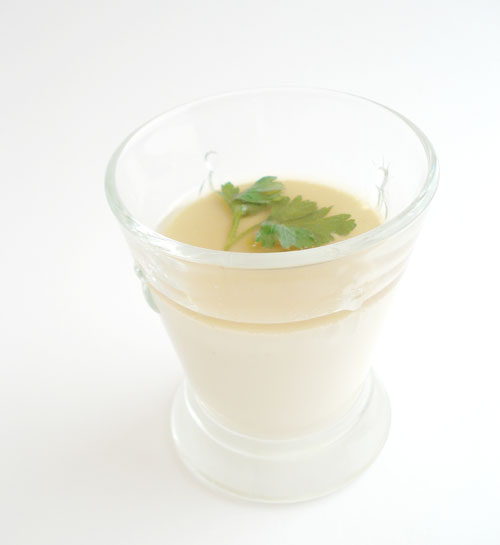
Previously, I explained how some dishes that are not tofu are called -tofu, because of the shape, texture or both. This is the case with tamago dofu, a smooth savory egg custard that's served cold.
You can make it in a square mold, to make it look tofu-like. But I prefer to keep it a lot simpler by cooking the tamago dofu in the serving container it will be served in. This can be anything as long as it's heat-proof. Here I have used some sturdy glass cups made of pressed glass, but I've also used little pudding molds, tiny glass bowls made for holding ingredients while you're cooking, and even coffee cups.
There are very few ingredients in a tamago dofu: dashi or soup stock, eggs, and a few flavorings. Because of this, each component should be of top quality, because you'll taste each one quite clearly. Traditionally the soup component is dashi, but I don't really like the fish flavor of dashi when it's cold. So I prefer to make a simple vegetable stock instead.
Tamago dofu should be served ice cold. It's a great appetizer for a summer meal, or an interesting and soothing snack. I have been guilty of making 4 cups and 'hiding' them so I can eat them all by myself.
Filed under:
eggs japanese party food summer
From the archives, originally posted March 2, 2007. These delicately colored sushi are a great way to use __usuyaki tamago__. I know I've been re-posting things from the archives a lot lately, but I hope you'll forgive me - I'm moving tomorrow! In any case, I hope you'll give these delicate sushi a try, especially if you have daughters or granddaughters.
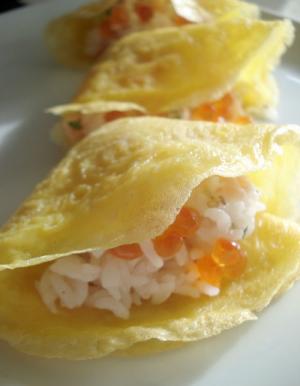
The 3rd of March is Momo no sekku or Peach Day in Japan. Peach blossoms usually start blooming around this time, signifying the coming of spring. It's also the day for _hina matsuri_, the Doll Festival or Girls' Festival. Households with daughters display hina ningyou-, traditional dolls that represent a princess's wedding procession. This is because the ultimate happiness expected for a girl was for her to make a fruitful and comfortable marriage. Nowadays girls may be expected to do other things besides become happy wives, but on this day at least traditions still hold strong.
In Japan there is a long standing stereotype that girls and women like very sweet things, while manly men like less sweet and bitter things. So, for Hina Matsuri the guests are served sweet things like amazake (a very thick non-alcoholic hot drink made from the lees of sake, rather like eggnog in color and cloying sweetness), hishimochi (tri-colored mochi cake) and okoshi (colored sweetened puffed rice). Although there were three girls in our house, none of us liked amazake at all. However, my mother often made some kind of sushi for Hina Matsuri, which we really loved.
Here are two kinds of very pretty, girlie sushi in feminine pink, yellow and white with a touch of green. These colors fit the theme of Hina Matsuri perfectly: the traditional hishimochi is colored white, pink (or light red) and green.
Filed under:
eggs japanese party food spring rice sushi bento
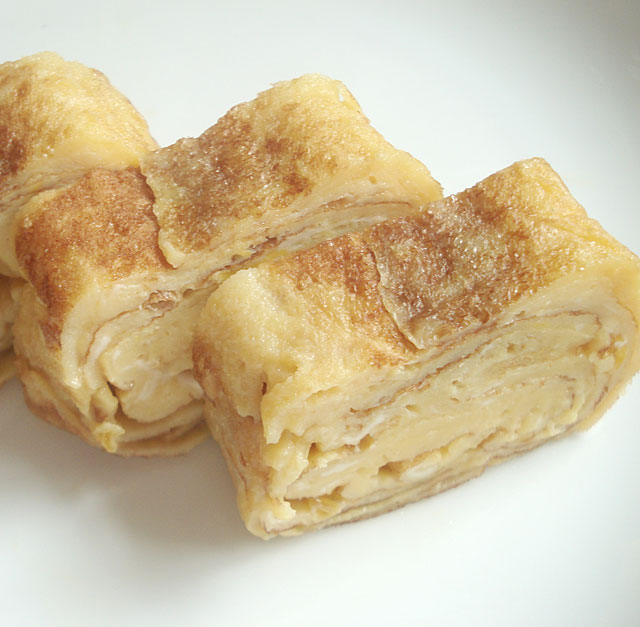
Tamagoyaki is such a integral part of Japanese food that I am rather kicking myself for not having posted a recipe for it before here. The name tamagoyaki means "fried egg", and the alternate name, atsuyaki tamago, means "thick fried egg". (Some books or restaurants erroneously called it just tamago, which just means "egg".) A slightly sweet, moist square-shaped egg concoction, tamagoyaki is a bento box staple, as well as being a popular sushi neta (topping). It's also great as a side dish for any meal.
Filed under:
basics eggs japanese bento washoku
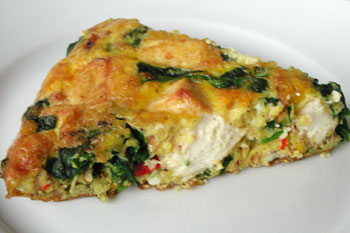
We are into Week 5 of MasterChef. The ingredients for day 17 are:
Filed under:
cheese eggs vegetarian tofu
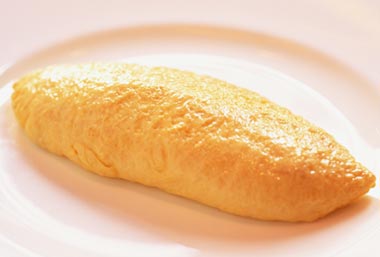
Sometimes making a particular dish takes a long time, involving several steps, but if you follow the directions carefully enough it's fairly easy. On the other hand there are things that only take a few minutes to prepare, but may take years to really get right.
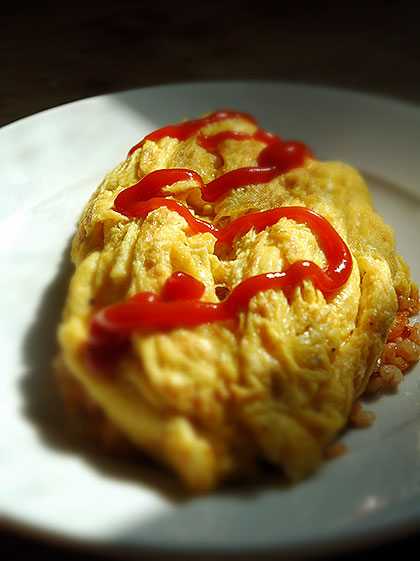
One such item is a classic plain omelette.
Filed under:
basics eggs favorites
(This is a revised and expanded version of a recipe that I posted when Just Hungry was brand new.)
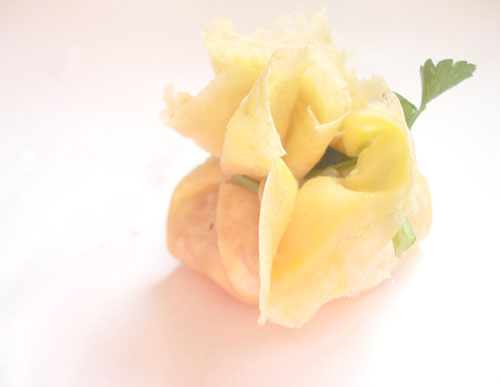
Japanese people love eating eggs in many ways. One of the most popular uses for the egg is to make a very thin omelette called usuyaki tamago (literally, thinly cooked egg). Usuyaki tamago is used julienned as a garnish, or as a wrapper for sushi rice and other things.
Filed under:
basics eggs japanese
Pages

 Welcome to Just Hungry, where we serve authentic Japanese recipes and more! I'm